


The Tailor-Made Guide to What to Expect on a Luxor Aswan Nile Cruise
Updated: Mar 16

Disclosure: This post contains affiliate links. Regardless of this, please be advised that all opinions expressed in this blog post are genuine and authentically my own.
Author: Barry Pickard
Hi, I'm Barry, the owner of Tailor-Made Itineraries and I have been designing bespoke self-guided tours for adventurous and curious travellers since 2015. I am a history graduate with a passion for travel.
I created this blog to show, through my own adventures, how you can have an incredible travel experience as an independent traveller, giving you the information to navigate the world with confidence.

Contents
Have you ever wondered what it's really like to cruise the Nile River between Luxor and Aswan? I'll be honest — before I stepped aboard that first morning in Luxor, watching the sun rise over the ancient riverbanks, I had my doubts. Would it feel too structured? Too touristy? Would I spend the whole week longing for the freedom I usually relish as an independent traveller? But as the warm breeze carried the scent of river water and distant spice markets across the deck, and as I heard the gentle calls of fishermen casting their nets into the amber water, something shifted. This wasn't just another package tour. This was the Nile — Egypt's timeless artery of life, history, and legend — and I was about to experience it in a way that balanced comfort with genuine adventure. If you've landed here searching for honest, practical advice on what to expect from a Luxor Aswan Nile Cruise, you're in exactly the right place.

I'm Barry, and over the past decade I've been designing bespoke self-guided tours for independent travellers who crave both freedom and depth in their journeys. I've explored Egypt multiple times, navigating its temples, haggling in its souks, and piecing together itineraries that work for real people with real budgets. When I finally decided to experience Nile River cruising for myself, I brought that same independent spirit — and a healthy dose of scepticism. What I discovered was a week that exceeded my expectations in almost every way: a journey that offers structure without suffocation, luxury without pretension, and history served up in a way that feels both accessible and profound.

This guide is drawn entirely from my own experience aboard the Steigenberger Royale, sailing the classic 7-night loop from Luxor to Aswan and back again. I'll walk you through everything: choosing the right cruise on the Nile, what those early-morning excursions to temples like Edfu and Kom Ombo really feel like, how to balance sightseeing with those blissful afternoons drifting past villages and palm groves, and what life onboard is actually like (spoiler: it's more relaxed than you might think). Whether you're trying to decide if a Nile River cruise is right for you, wondering how it fits into a broader Egypt itinerary, or simply curious about the logistics — from tipping to packing to avoiding seasickness on the calmest river you'll ever sail — I've got you covered. So, settle in, pour yourself a coffee (or imagine yourself on that sun deck with a hibiscus tea in hand), and let me show you exactly what awaits on one of the world's most iconic river journeys.

Don’t forget that Tailor-Made Itineraries delights in creating bespoke self-guided tours. So, if planning a Luxor Aswan Nile cruise appeals to you, reach out to me by email. I would be more than happy to discuss your requirements incorporating the wonders of the Nile, or indeed, a general tour of Egypt.

What to Expect on a Luxor Aswan Nile Cruise
What a Nile Cruise is Really Like
As someone who usually relishes planning every detail of my own adventures, stepping onto a Nile cruise felt like an unusual but very welcome shift — a chance to hand over the logistics while still enjoying a richly curated travel experience. I'd done my research beforehand to make sure the itinerary aligned with my goals, but once onboard, I quickly realised how seamlessly a Nile cruise blends structure with relaxation. Days typically start with early-morning excursions to iconic temples and ancient sites before returning to the boat for leisurely afternoons spent sailing between palm‑lined banks, watching fishermen cast their nets and villages drift by. Evenings are unhurried and sociable, with optional entertainment but plenty of quiet corners for downtime. Compared to ocean cruising, life on the Nile feels more intimate, calm, and connected to the landscape — ideal for travellers wondering whether this kind of journey is right for them.

Choosing the Right Nile Cruise
Choosing the right cruise can feel overwhelming at first, with everything from an intimate dahabiya Nile cruise to large multi‑deck ships offering itineraries of varying lengths and styles. Broadly speaking, cruises on the Nile fall into three tiers — budget, mid‑range and luxury — with the Steigenberger Royale, the ship I sailed on, sitting comfortably in the upper mid‑range category. It offers an excellent balance: well‑appointed cabins, polished service, and good facilities, but without tipping into the ultra‑luxury pricing bracket. Larger cruise ships like this provide a stable ride, a sociable atmosphere, and more amenities, making them especially suitable for first‑time visitors to Egypt or those who prefer a little more comfort and predictability as they explore the ancient world.

Of course, the experience differs markedly depending on the style of vessel you choose. Dahabiya Nile cruises — the elegant, traditional sailboats — are perfect for travellers wanting an intimate, slower-paced journey with fewer passengers and more personalised service. They can moor at quieter spots along the river, offering a sense of exclusivity and tranquillity. However, they tend to be more expensive and operate on set schedules that rely on favourable winds. Large cruise boats on the Nile, like the Steigenberger Royale, offer greater stability, consistent sailing regardless of wind conditions, more space, wider social options, and a fuller range of onboard facilities. They are also better suited to travellers with mobility considerations, families, and anyone who appreciates having a structured and well-supported itinerary.

Itineraries themselves vary widely. My journey followed the classic 7‑night Luxor → Aswan → Luxor route — a wonderfully comprehensive loop that allows time to explore the major sites while still enjoying long stretches of languid sailing. Shorter 3‑ or 4‑night Nile cruises from Luxor to Aswan are available too, typically covering just one direction between Luxor and Aswan, ideal for those tight on time. Longer itineraries exist, though they are less common. And although many people wonder about a Nile River cruise from Cairo, cruises on that section of the Nile rarely operate due to navigation challenges, limited tourist infrastructure, and stretches of river that are less scenic. Ultimately, one of the best Nile cruises is best suited to travellers who value structure, comfort, and historical immersion — especially first-time Egypt visitors, those with limited time, or travellers who appreciate guided sightseeing. It is less ideal for backpackers, those craving complete independence, or anyone expecting a luxury beach‑resort atmosphere. The magic of the Nile lies in its blend of calm, culture and curated travel — choosing the right style simply shapes how you experience it.
Best Time to Cruise
The best time to enjoy a Nile cruise really depends on what you value most: cooler temperatures or quieter sights. Peak season, from late autumn to early spring, offers comfortable weather but attracts the largest crowds, especially at the major temples. Shoulder months like September — when I travelled — strike a superb balance: yes, the temperatures are hotter, but the early‑morning excursions mean you explore before the heat peaks, and the air‑conditioned ship provides plenty of respite afterwards. I found the reduced crowds to be a huge advantage, allowing for a more relaxed experience at the sites. River levels and daylight hours also play their part, with the Nile delivering spectacular sunrises and sunsets that bookend each day's journey. Onboard, the vibe shifts subtly with the seasons too: quieter during hotter months, busier and more sociable in cooler periods, and often better-value pricing outside peak season — all factors worth considering when choosing the perfect time for your cruise.

If you are enjoying this list, remember and subscribe to my mailing list to receive my latest blog posts.
Early Starts & Afternoon Leisure
A classic Aswan Luxor Nile cruise follows a wonderfully balanced rhythm, beginning with early starts and full mornings of sightseeing before transitioning into long, unhurried afternoons on the river of Egypt. During the mornings, there was a burst of immersive exploration — the West Bank in Luxor, Edfu Temple, Kom Ombo Temple, and the major sites around Aswan — all best visited in the cooler early hours. Times for tour departure often fell between 7am and 8am, which may feel early to some, but the payoff is enormous: quieter temples, softer light for photography, and the chance to explore comfortably before the heat rises.

Spending two nights in Aswan (as in my itinerary) created a welcome pause in the pace. It gave me breathing room to enjoy this beautiful part of Upper Egypt and offers the flexibility of an optional excursion to Abu Simbel — a long but rewarding day that many consider a standout of their entire Egypt trip. For those who opt out, a leisurely day in Aswan can be just as appealing, especially for travellers looking to avoid excursion fatigue. As the ship turns and begins its journey back toward Luxor, the tempo softens. Sailing days unfold gently, with hours spent gliding past scenes of everyday life along the riverbanks: fishermen balancing effortlessly in narrow boats, children waving from dusty paths, and fields of palm trees rippling in the warm breeze.

One of the surprisingly memorable moments of the week is passing through the Esna Lock — not an inconvenience, but a fascinating piece of river life. Watching small vendors approach the ship in their boats or observing the mechanics of the lock system as your vessel rises or descends adds a unique dash of drama to the day. Once back on open water, afternoons become the essence of the cruise down the Nile experience. This is when the boat's calm rhythm takes over: lounging on the sun deck, sipping a cool drink, reading in a shaded nook, or simply watching the scenery drift by. The combination of structured sightseeing in the mornings and restorative leisure in the afternoons creates a beautifully balanced week. To manage your energy, a simple routine helps — hydrate constantly, rest whenever you feel the heat catching up, and embrace those quiet moments between excursions. After all, these gentle afternoons on the river are some of the most unforgettable parts of Nile cruising.

Sightseeing Days – Luxor
I enjoyed two tours of Luxor, with the first at the start of the cruise covering the West Bank's iconic sights, like the Valley of the Kings, and the second at the end of the cruise covering the temples of Karnak and Luxor. This was a perfect introduction and finale to the cruise. However, I am keeping the detail of these tours light as I have posted about Luxor separately.

Sightseeing Days – Edfu Temple
Visiting the Temple of Horus at Edfu is one of the most rewarding stops on the cruise and a highlight of Day 3 of my itinerary. After disembarking at the quayside, we hopped into a minivan taxi for the short ride through the town to the temple complex — a quick and easy transfer that added a little slice of local colour to the morning. Edfu Temple itself is remarkably well‑preserved, often described as one of the best‑maintained ancient temples in all of Egypt. Its soaring pylons, intricate reliefs, and spacious courtyards give a powerful sense of what a functioning Ptolemaic temple once felt like. As you walk through the hypostyle hall and gaze up at the finely carved depictions of Horus, it's easy to imagine the rituals and processions that once filled these spaces.

What makes this visit particularly compelling is the combination of its architectural completeness and the clarity of its mythology. Edfu is dedicated to Horus the Falcon‑God, and much of the temple's decoration recounts the legendary battle between Horus and Seth — stories that your guide will bring vividly to life as you explore. Because this excursion is included in most cruise packages, it's an effortlessly accessible experience that requires no additional planning or cost. Whether you're fascinated by ancient religion, enjoy detailed carvings, or simply want to walk through one of Egypt's most atmospheric temples, Edfu is a must‑do. It blends storytelling, history, and immense beauty into a visit that perfectly complements the momentum of the cruise.
Edfu Temple Edfu Temple Edfu Temple Edfu Temple Edfu Temple Edfu Temple Edfu Temple Edfu Temple Edfu Temple Edfu Temple Edfu Temple Edfu Temple Edfu Temple Edfu Temple Edfu Temple Edfu Temple Edfu Temple Edfu Temple Edfu Temple Edfu Temple Edfu Temple Edfu Temple Edfu Temple Edfu Temple Edfu Temple Edfu Temple Edfu Temple Edfu Temple Edfu Temple Edfu Temple Edfu Temple Edfu Temple Edfu Temple Edfu Temple Edfu Temple Edfu Temple Edfu Temple Edfu Temple Edfu Temple Edfu Temple Edfu Temple Edfu Temple Edfu Temple Edfu Temple Edfu Temple Edfu Temple Edfu Temple Edfu Temple Edfu Temple
Click to reveal more images in the carousel.
Sightseeing Days – Kom Ombo Temple
The visit to Kom Ombo Temple is one of the most atmospheric stops on the cruise, thanks in part to its beautiful riverside setting. Unlike Edfu, Kom Ombo was just a two‑minute walk from where the ship docked, making it the easiest excursion of the week. The temple is unique in Egypt for its dual dedication: one half honours Haroeris (Horus the Elder), while the other is devoted to Sobek, the crocodile god. This symmetry is visible everywhere — from twin entrances to paired sanctuaries — and gives the site an unusual layout that immediately sets it apart. The warm afternoon light enhances the carved pillars and reliefs, creating a particularly photogenic visit as the sun begins to drop behind the palm trees lining the river.

Kom Ombo is also home to one of the cruise's most memorable curiosities: the Crocodile Mummy Museum, where dozens of ancient, naturally preserved crocodiles are displayed alongside artefacts linked to Sobek worship. It's a small but fascinating space that adds depth to the mythology of the temple and gives you an insight into the reverence (and fear!) ancient Egyptians held for these river creatures. The temple visit itself is included in the cruise package, and it's absolutely worth joining, not just for the archaeological interest but for the serenity of the setting. Standing on the terrace overlooking the Nile as feluccas drift past is an experience that captures the very essence of travelling through Upper Egypt — a blend of history, scenery, and gentle river life.
Kom Ombo Temple Kom Ombo Temple Kom Ombo Temple Kom Ombo Temple Kom Ombo Temple Kom Ombo Temple Kom Ombo Temple Kom Ombo Temple Kom Ombo Temple Kom Ombo Temple Kom Ombo Temple Kom Ombo Temple Kom Ombo Temple Kom Ombo Temple Kom Ombo Temple Kom Ombo Temple Kom Ombo Temple Kom Ombo Temple Kom Ombo Temple Kom Ombo Temple Kom Ombo Temple Kom Ombo Temple Kom Ombo Temple Kom Ombo Temple Kom Ombo Temple Kom Ombo Temple Kom Ombo Temple Kom Ombo Temple Crocodile Mummy Museum Crocodile Mummy Museum Crocodile Mummy Museum Crocodile Mummy Museum Crocodile Mummy Museum Crocodile Mummy Museum Crocodile Mummy Museum Crocodile Mummy Museum Crocodile Mummy Museum Crocodile Mummy Museum Crocodile Mummy Museum
Click to reveal more images in the carousel.
Sightseeing Days – Aswan
My full day in Aswan on Day 4 offered a wonderfully varied mix of ancient monuments and river experiences, from the High Dam and Unfinished Obelisk to the boat trip across to Philae Temple, followed later by a relaxing felucca sail around Kitchener Island. Since I've written a separate in‑depth guide to Aswan, I'll save the detail for that post and simply note here that this day forms one of the most memorable and well‑paced parts of the entire cruise.

Sightseeing Days – Abu Simbel
The visit to Abu Simbel falls on Day 5 and is offered as an optional excursion rather than part of the standard cruise package — but for me, it was unquestionably one of the highlights of the entire trip. You can choose between a long 8‑hour return coach journey, which is the more affordable option, or a short flight from Aswan, which saves considerable time but comes with a much higher price tag. We chose the coach, and although it made for an early start and a long day, the experience of finally standing before the colossal statues of Ramses II felt more than worth the journey. The sense of scale, the remarkable relocation story, and the setting on the shores of Lake Nasser make Abu Simbel unlike anything else you'll see on the cruise. Again, I have written a separate guide to Abu Simbel, which will describe why I think this is an essential visit.
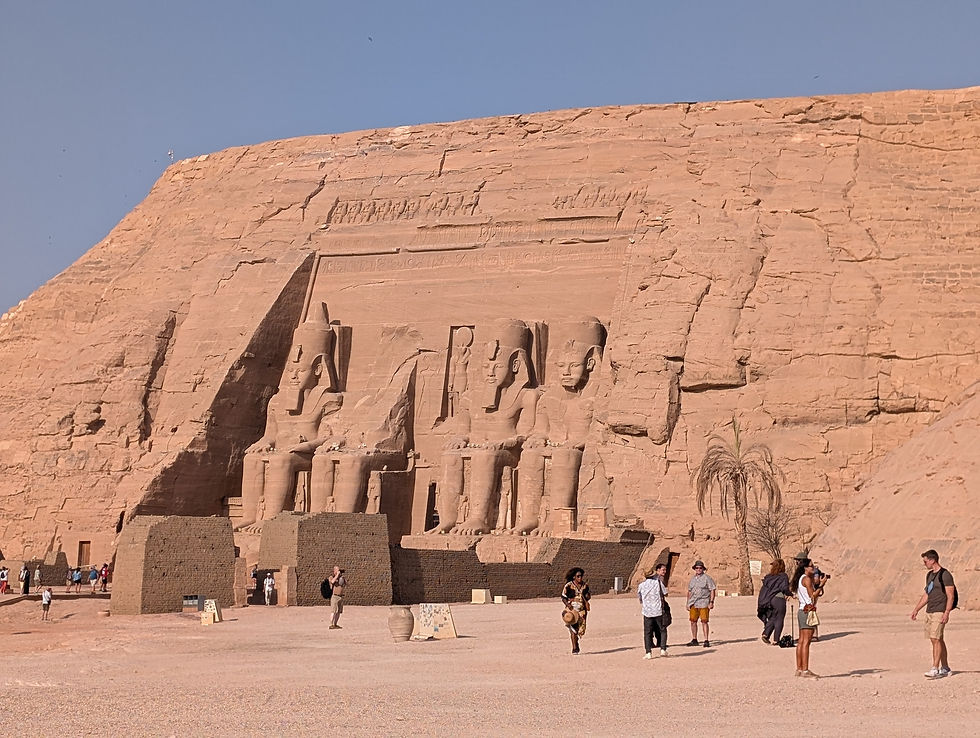
That said, a quiet leisure day in Aswan is also a completely valid and tempting choice — especially if you're beginning to feel the effects of early mornings and full days of sightseeing. The city's relaxed atmosphere and beautiful riverscape offer plenty of ways to unwind. But in my case, the draw of Abu Simbel was simply too strong to resist, and I'm glad I made the effort; it truly felt like a once‑in‑a‑lifetime opportunity that enriched the entire journey.
If you are enjoying this list, remember and subscribe to my mailing list to receive my latest blog posts.
The Nile as a Destination, Not Just a Route
One of the quiet joys of a Nile cruise is realising that the river itself is every bit as captivating as the temples along its banks. Between excursions, long stretches of sailing allow you to simply watch daily life unfold: farmers tending narrow strips of fertile land, children waving from sandy paths, and fishermen expertly casting nets from small wooden boats. The landscapes change gently as you move between Upper Egypt's towns, shifting from palm‑lined villages to wide, open stretches of river framed by golden desert. These peaceful interludes — often accompanied by spectacular sunrises and sunsets — become moments of reflection and calm, reminding you that the Nile isn't just a means of getting from one historical site to the next, but a living, breathing destination in its own right.
How This Nile Cruise Fits into a Wider Egypt Itinerary
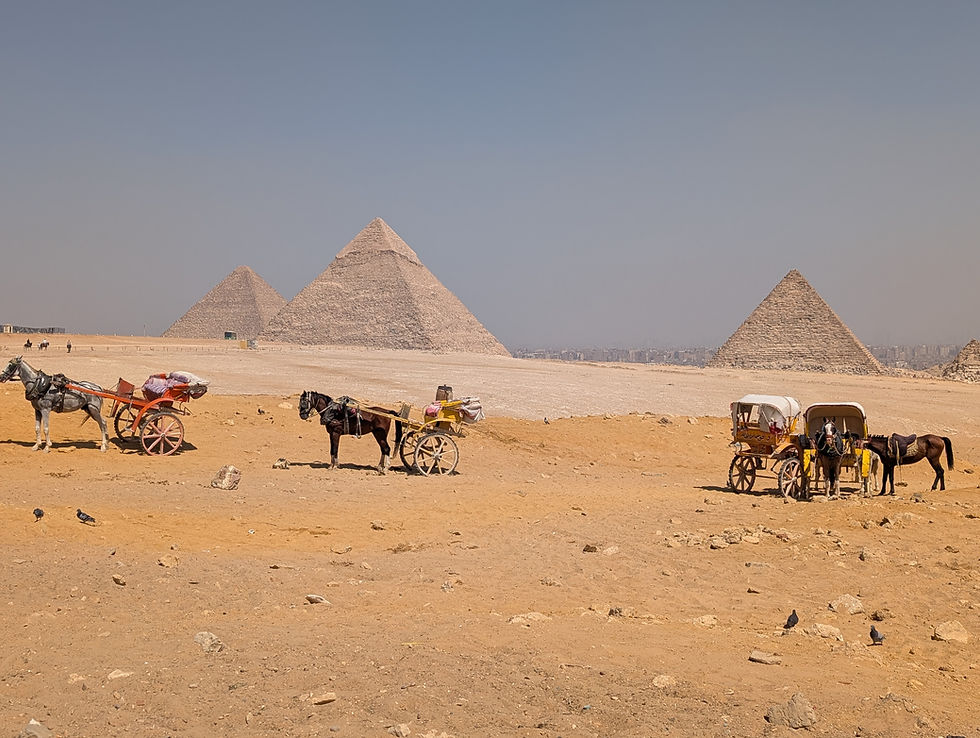
A Nile cruise fits beautifully into a longer Egypt itinerary, providing a structured and comfortable way to experience many of the country's most significant ancient sites without constantly repacking or navigating transport logistics. It pairs especially well with time in Cairo, where the pyramids, the Grand Egyptian Museum, and the bustling cityscape offer a wonderfully contrasting start or finish to your river journey. Adding a few days by the Red Sea or even visiting Alexandria also creates a well-rounded trip, with opportunities to unwind by the coast or explore Egypt's Mediterranean heritage. For most travellers, I recommend allowing around seven nights in addition to the cruise itself, giving you enough time to enjoy Egypt's diverse regions at a relaxed and rewarding pace.

Life Onboard
Life onboard the cruise offers a comfortable and relaxing base from which to explore Egypt. The cabins are surprisingly spacious — comparable to a standard medium‑sized hotel room — with everything you need for a week on the river. The shower rooms are on the smaller side, but perfectly functional, and since most of your time is spent out on excursions or enjoying the ship's shared spaces, the cabins really serve as a cosy retreat rather than a place you linger all day. Mealtimes quickly become a much‑loved rhythm: buffet‑style breakfasts, lunches, and dinners with fresh food, plenty of variety, and themed stations including an egg station in the mornings, pasta in the evenings, and a daily carving station offering roasted meats. For early risers or those heading to Abu Simbel, a packed lunch is provided. One of the real treats is afternoon tea, served only when the vessel is sailing — a small but lovely ritual that adds to the relaxed onboard feel.
Luxor Aswan Nile Cruise Luxor Aswan Nile Cruise Luxor Aswan Nile Cruise Luxor Aswan Nile Cruise
The ship's facilities strike a great balance between comfort and simplicity. The sun deck has ample loungers for soaking up the scenery, with a small pool perfect for cooling off during hotter parts of the day. If you prefer shade, there's also a covered deck area, and indoors you'll find a lounge and bar with quieter corners for reading or taking a break from the heat — all air‑conditioned and pleasantly calm. There was no strict dress code onboard the Steigenberger Royale, and most guests dress casually throughout the day, shifting to relaxed smart‑casual in the evenings for entertainment or the captain's cocktail reception. As for connectivity, Wi‑Fi is available, though it tends to dip during sailing and was unavailable entirely in the final day and a half of our trip — worth noting if you plan to stay in touch regularly. Evenings offer light entertainment: short performances, cultural shows, and a chance to meet the captain and crew. Whether you want to be sociable or keep to yourself, the boat is spacious enough to allow both — a blend of gentle activity and peaceful relaxation that suits the pace of Nile cruising perfectly.
Luxor Aswan Nile Cruise Luxor Aswan Nile Cruise Luxor Aswan Nile Cruise Luxor Aswan Nile Cruise Luxor Aswan Nile Cruise Luxor Aswan Nile Cruise Luxor Aswan Nile Cruise Luxor Aswan Nile Cruise Luxor Aswan Nile Cruise
What's Included
The inclusions on a Nile cruise can vary by operator, so it's always worth double‑checking the details of any trip you're considering. For my cruise, the package was reassuringly comprehensive, covering all the essentials you'd expect for a smooth and enjoyable journey along the Nile. Accommodation, all meals, guided tours, entry fees, and transfers were included, along with two small bottles of water per day, which were very welcome under the Upper Egyptian sun. The excursions to sites such as Edfu, Kom Ombo, the West Bank in Luxor, and the key monuments around Aswan were all part of the package, meaning there were no surprise costs for the core sightseeing experiences.

Some items, however, were not included. The optional excursion to Abu Simbel required an additional fee, regardless of whether you chose to travel by coach or by air. Drinks—both soft and alcoholic—were also extra, though I found them reasonably priced with a modest but sufficient selection. Additional bottled water was available to purchase and added to your bar bill — something to factor in, as staying hydrated is absolutely essential in Egypt's climate. Rather than paying as you go, beverages were added to a bar bill, which you settled before disembarkation; I checked mine carefully and can happily confirm everything was accurate (if anything, a few items were missing!). Tipping is another important consideration: on my cruise, the company suggested contributing to a tipping kitty for drivers and local guides at the start of the trip (£1 per person per day). At the end, a collective tip of £25 per person was recommended for the boat staff, along with £15 per person for our guide/Egyptologist. While tips can be given in Egyptian pounds, crew members much prefer Pound Sterling (not Scottish notes), Euros, or US Dollars.

Cultural Etiquette
Cultural etiquette on a Nile cruise is wonderfully straightforward, and much of it comes down to simple courtesy and common sense. Interactions with the crew, guides, and local vendors are warm and relaxed, and a friendly smile or polite greeting goes a long way. Dress is generally casual when arriving or departing the boat, though it's wise to have shoulders and legs covered if you plan to visit mosques or Coptic churches during shore excursions. Photography on the river doesn't come with any special rules — simply be respectful when photographing people, and avoid pointing your camera at anyone who seems uncomfortable. At docking points and in nearby villages, normal manners apply: be considerate of local routines, give people space, and follow your guide's lead when navigating busy areas. The overall atmosphere is calm and welcoming, so you'll find that a thoughtful, respectful approach is all that's needed to enjoy a smooth and pleasant experience.

If you are enjoying this list, remember and subscribe to my mailing list to receive my latest blog posts.
Quick Questions Answered
What should I pack specifically for a cruise? On Nile cruises, the "Egyptian Night" (sometimes called Galabeya Night) invites guests to dress in traditional-style Egyptian clothing. Many passengers purchase inexpensive galabeyas from shops near the docks or onboard the ship. The evening is usually light‑hearted, with music, dancing, and Egyptian‑themed entertainment. I had a galabeya from a previous trip, so I packed that in my suitcase. Other than a galabeya, just pack summer clothes and accessories that you would do for a stay in an Egyptian hotel. Don't forget your swimsuit!
What should I bring with me in a day bag? Water, sunscreen, hat, camera/phone, tissues, disposable toilet wipes, hand sanitiser, small cash for tips, purchases or toilets, and a light scarf for shade or modesty at religious sites.
Luxor Aswan Nile Cruise Luxor Aswan Nile Cruise Luxor Aswan Nile Cruise
What currency is used onboard? Bills and tipping were settled in Egyptian Pounds, but Pound Sterling (not Scottish notes), Euros, or US Dollars were preferred.
Is one day enough in Asway? One day is enough to see the Aswan High Dam, Temple of Philae and the Unfinished Obelisk, which are the highlights of Aswan, but I would advise two full days in Aswan to also enjoy the Nubian Museum, the spice market and Kitchener Island
Should you expect seasickness or river motion? The Nile is extremely calm. I am highly susceptible to seasickness yet had no issues at all during the cruise.
Luxor Aswan Nile Cruise Luxor Aswan Nile Cruise Luxor Aswan Nile Cruise
What type of power sockets are used on the boat? The ship used Type F sockets, so bring the appropriate adapter if needed.
Are all cruises the same standard? Not at all. Standards vary widely depending on the ship size, age, refurbishment level, itinerary length, and service style. It's worth researching ship categories (budget, mid‑range, luxury) and checking recent reviews.
Is a Nile Cruise Worth It? Absolutely — it's one of the most efficient and enjoyable ways to see a large number of Egypt's most impressive ancient sites in a short period of time, with the added benefit of relaxed sailing and stress‑free organisation.

Conclusion
Looking back on my week sailing between Luxor and Aswan, I can honestly say that a Luxor Aswan Nile Cruise exceeded every expectation I had as an independent traveller. What started as a cautious experiment — handing over control to a structured itinerary — became one of the most rewarding and balanced travel experiences I've had. The blend of early-morning temple visits, lazy afternoons watching life unfold along the riverbanks, and the simple pleasure of having meals, logistics, and expert guidance all taken care of created a week that felt both richly educational and genuinely restorative. For anyone wondering if a Nile cruise is right for them, my answer is simple: if you value history, comfort, and a chance to experience one of the world's most iconic rivers without the stress of planning every detail, then yes — absolutely. Whether you opt for a shorter itinerary or commit to the full 7-night loop, whether you sail on a traditional dahabiya or a larger ship like the Steigenberger Royale, the magic of the Nile will find you. It's a journey that stays with you long after you've stepped ashore, and one that I'd recommend without hesitation to anyone ready to experience Egypt's ancient heart at its most accessible and unforgettable.

Related Blog Posts
If you would like more information on Egypt and how to visit this fascinating country, please view the Tailor-Made Itineraries posts below:
Luxor Aswan Nile Cruise Luxor Aswan Nile Cruise Luxor Aswan Nile Cruise Luxor Aswan Nile Cruise Luxor Aswan Nile Cruise Luxor Aswan Nile Cruise
What aspect of a Luxor Aswan Nile Cruise appeals to you most — the ancient temples, the peaceful river scenery, or the comfort of a guided experience?
Don’t forget that Tailor-Made Itineraries delights in creating bespoke self-guided tours. So, if planning a Luxor Aswan Nile cruise appeals to you, reach out to me by email. I would be more than happy to discuss your requirements incorporating the wonders of the Nile, or indeed, a general tour of Egypt.
Tailor-Made Itineraries posts every two weeks, and you can subscribe to the latest blog and newsletter here. Until then, happy reading and safe travels.
Barry
Contact Me: tailoritineraries@gmail.com
Tailor-Made Itineraries create one-of-a-kind bespoke self-guided travel itineraries for adventurous and curious travellers.
These self-guided tours deliver a personalised and exciting holiday experience that takes the effort out of trip planning.
Luxor Aswan Nile Cruise Map


Comments