


The Tailor-Made Guide of Things to Do in Luxor Egypt
Updated: Mar 5

Disclosure: This post contains affiliate links. Regardless of this, please be advised that all opinions expressed in this blog post are genuine and authentically my own.
Author: Barry Pickard
Hi, I'm Barry, the owner of Tailor-Made Itineraries and I have been designing bespoke self-guided tours for adventurous and curious travellers since 2015. I am a history graduate with a passion for travel.
I created this blog to show, through my own adventures, how you can have an incredible travel experience as an independent traveller, giving you the information to navigate the world with confidence.

Contents
Have you ever wondered what it feels like to stand where pharaohs once walked, surrounded by monuments so vast they seem to defy time itself? The dry heat hits you first as you step into Luxor—not oppressive, but insistent, carrying with it the faint scent of desert dust mixed with diesel from the tuk-tuks weaving through the streets. Then you hear it: the call to prayer echoing across the Nile, mingling with the rhythmic clip-clop of horse-drawn carriages and the animated haggling in the souks. And when you finally catch sight of those towering columns at Karnak, their ancient stone glowing amber in the late afternoon sun, you realise you've arrived somewhere truly extraordinary.

I'm Barry Pickard, and I've been designing bespoke self-guided tours since 2015, helping independent travellers like you navigate the world's most incredible destinations with confidence. As a history graduate with a passion for exploration, I've spent years researching and experiencing the places I write about firsthand—and Luxor has to be one of the most captivating. When I visited, I walked every temple corridor, explored multiple tombs in the Valley of the Kings, and watched the sunrise paint the Theban hills in shades of pink and gold. This isn't a generic guide cobbled together from other websites—it's a personal, practical account of the things to do in Luxor Egypt based on my own adventures.

If you're an independent traveller planning your Egyptian journey, you've found exactly what you need. This post will take you through Luxor's unmissable sites—from the sprawling temple complex at Karnak to the intimate beauty of Hatshepsut's mortuary temple—along with insider tips, timing advice, and the kind of practical information that only comes from being there yourself. Whether you've got two days or a week, I'll help you make the most of every moment in this extraordinary open-air museum. Ready to discover ancient Thebes? Let's dive in.

Don’t forget that Tailor-Made Itineraries delights in creating bespoke self-guided tours. So, if experiencing these things to do in Luxor appeals to you, reach out to me by email. I would be more than happy to design a self-guided tour around your requirements incorporating the attractions of Luxor, or indeed, a general tour of Egypt.

About Luxor
Luxor was once the mighty city of Thebes, the capital of Egypt during the New Kingdom and a centre of power and religion for centuries. This was the era of legendary pharaohs like Ramses II and Hatshepsut, who left behind monumental temples and tombs that still awe visitors today. The city flourished as a hub of worship for Amun-Ra, and its wealth and influence were reflected in the grandeur of Karnak and the royal necropolis across the Nile. Though its political importance faded over time, the dry desert climate preserved its treasures, making Luxor one of the most remarkable archaeological sites in the world.

Modern Luxor is a fascinating blend of ancient splendour and vibrant daily life. Stretching along the east bank of the Nile, it’s often called the world’s greatest open-air museum—and for good reason. Here, colossal temples rise beside bustling markets, and traditional feluccas glide past luxury hotels. The city thrives on tourism, welcoming millions of visitors each year, yet it retains an authentic charm with its lively souks, friendly locals, and Nile-side cafés. With so many incredible Luxor attractions to explore, whether you’re exploring the historic sites or soaking up the atmosphere of a modern Egyptian city, Luxor offers an unforgettable experience where past and present meet in spectacular fashion.
Things to Do in Luxor Egypt
Temple of Karnak
Karnak isn’t just a temple—it’s a sprawling complex that once served as the spiritual heart of ancient Egypt. Built and expanded over more than 1,000 years, it was dedicated primarily to Amun-Ra, the chief deity of the New Kingdom. Among all the things to see in Luxor, this stands out as truly unmissable. I found it an awe-inspiring experience, walking through its towering pylons and the famous Hypostyle Hall, with its forest of 134 massive columns. You’ll also find smaller chapels, obelisks, and sacred lakes scattered throughout the site, each telling its own story of pharaohs and devotion. The sheer scale and detail make Karnak one of the most impressive monuments in Egypt.

Exploring Karnak is an unforgettable experience. The Great Temple of Amun dominates the site, but there’s so much more to discover—from the awe-inspiring Hypostyle Hall with its towering columns to the impressive obelisks and intricately carved walls that tell stories of pharaohs and gods. The sacred lake offers a peaceful contrast to the grandeur of the stonework, making it a lovely spot to pause and take in the atmosphere. The complex is vast, so allow plenty of time to wander and appreciate the details. For something truly special, consider the evening sound and light show, which brings the temple’s history to life in a dramatic setting under the stars.
Temple of Karnak Temple of Karnak Temple of Karnak Temple of Karnak Temple of Karnak Temple of Karnak Temple of Karnak Temple of Karnak Temple of Karnak Temple of Karnak Temple of Karnak Temple of Karnak Temple of Karnak Temple of Karnak Temple of Karnak Temple of Karnak Temple of Karnak Temple of Karnak Temple of Karnak Temple of Karnak Temple of Karnak Temple of Karnak Temple of Karnak Temple of Karnak Temple of Karnak Temple of Karnak Temple of Karnak Temple of Karnak Temple of Karnak Temple of Karnak Temple of Karnak Temple of Karnak Temple of Karnak Temple of Karnak Temple of Karnak Temple of Karnak Temple of Karnak Temple of Karnak Temple of Karnak Temple of Karnak Temple of Karnak Temple of Karnak
Click to reveal more images in the carousel.
Tailor-Made Top Tip:
Visit early or late: Avoid the midday heat and enjoy quieter moments. The temple can fill up quickly once the bus loads of sightseers arrive.
Temple of Luxor
The Temple of Luxor is one of Egypt’s most iconic monuments, built during the reign of Amenhotep III and later expanded by Ramses II. Unlike Karnak, which was primarily a religious centre, Luxor Temple was dedicated to the rejuvenation of kingship and played a central role in the annual Opet Festival. Its grand entrance, flanked by colossal statues of Ramses II and a towering obelisk, sets the stage for an awe-inspiring visit. Inside, you’ll find elegant colonnades, intricate hieroglyphs, and chapels that reflect centuries of architectural evolution—from the pharaonic era to later additions by Alexander the Great and even Roman influences.

I visited the temple in the late morning, and even at that time, the atmosphere was incredible. The sunlight illuminated the sandstone columns beautifully, highlighting the carvings and casting sharp shadows across the courtyards. Compared to Karnak, Luxor Temple feels more intimate, yet its history is just as rich, and the details in the reliefs are fascinating. It’s easy to picture the grand processions that once passed through these halls during ancient festivals. If you have time, returning in the evening when the temple is lit up offers a completely different and magical perspective.


Tailor-Made Top Tips:
Luxor Temple has its own entry ticket, separate from Karnak, so check current prices and opening hours.
The temple is beautifully illuminated after dark, so consider a second visit for a different experience.
Temple of Luxor Temple of Luxor Temple of Luxor Temple of Luxor Temple of Luxor Temple of Luxor Temple of Luxor Temple of Luxor Temple of Luxor Temple of Luxor Temple of Luxor Temple of Luxor Temple of Luxor Temple of Luxor Temple of Luxor Temple of Luxor Temple of Luxor Temple of Luxor Temple of Luxor Temple of Luxor Temple of Luxor Temple of Luxor Temple of Luxor Temple of Luxor Temple of Luxor Temple of Luxor Temple of Luxor Temple of Luxor Temple of Luxor Temple of Luxor Temple of Luxor Temple of Luxor
Click to reveal more images in the carousel.
Avenue of the Sphinxes
Stretching for nearly three kilometres, the Avenue of Sphinxes is an extraordinary processional route that once linked Karnak Temple to Luxor Temple. Originally built during the reign of Amenhotep III and later restored by Nectanebo I, this grand avenue was lined with hundreds of sphinx statues, each symbolizing strength and protection. The avenue played a central role in the Opet Festival, when statues of the gods were carried in procession between the two temples. Today, many of these sphinxes have been carefully excavated and restored, offering a glimpse into the ceremonial grandeur of ancient Thebes.
I walked part of the avenue during my visit, and it’s incredible to see how much of this ancient route has been brought back to life. The alignment of sphinxes creates a striking visual perspective, and imagining the processions that once passed along this path adds a sense of drama to the experience. The restored sections near Luxor Temple are particularly impressive, and the scale of the project to uncover and preserve this avenue is remarkable.

Tailor-Made Top Tips:
The most accessible and restored section begins at the Luxor Temple, making it a great starting point.
Walking the avenue works well as part of a Karnak–Luxor itinerary.
Avenue of the Sphinxes Avenue of the Sphinxes Avenue of the Sphinxes Avenue of the Sphinxes
If you are enjoying this list, remember and subscribe to my mailing list to receive my latest blog posts.
Mumification Museum
The Mummification Museum offers a fascinating insight into one of ancient Egypt’s most intriguing practices—the art of preserving the dead for the afterlife. This small but well-curated museum explains the techniques and religious beliefs behind mummification, not just for humans but also for animals, which were often embalmed as offerings to the gods. Exhibits include tools used in the process, canopic jars, and even a well-preserved mummy, giving visitors a close-up look at the craftsmanship and symbolism that defined this ritual.
Mumification Museum Mumification Museum Mumification Museum
I visited the museum during the afternoon, and it was a welcome break from the larger, open-air sites. The museum is compact, so you can explore it comfortably in half an hour, but the displays are detailed and informative. It’s a great way to deepen your understanding of the burial traditions you’ll encounter at places like the Valley of the Kings. The quiet atmosphere also makes it easy to take your time and absorb the information without feeling rushed.
Mumification Museum Mumification Museum Mumification Museum Mumification Museum Mumification Museum Mumification Museum Mumification Museum Mumification Museum Mumification Museum Mumification Museum Mumification Museum Mumification Museum
Tailor-Made Top Tip:
The museum is on the Corniche, close to Luxor Temple, making it easy to combine with a trip to the temple.
Read on to find out the highlights on the West Bank of Luxor.
Colossi of Memnon
These two massive, seated statues of Pharaoh Amenhotep III once guarded his grand mortuary temple. Carved from quartzite sandstone and standing about 14–18 meters tall, they were erected around 1390–1353 BCE as symbols of royal power and divine presence. The statues suffered extensive damage over centuries—an earthquake around 1200 BCE collapsed significant portions of both figures and the surrounding temple. Since the late 1990s, an extensive restoration project has painstakingly reassembled the Colossi, reviving their imposing presence. Nearly two decades in the making, the restoration was finally completed in late 2025, allowing visitors to once again appreciate their full scale and historical context.

Approaching the Colossi during my visit was a moment of awe—the sheer size and serene aura of these ancient guardians were strikingly powerful. Even after the extensive restoration, the cracks and weathered patches remind you of their turbulent past. Positioned on the flat desert plain, the statues offer a dramatic contrast against the open sky, making them especially photogenic at sunrise or sunset. The recent renovation means the figures are more stable and complete than they’ve been in centuries, giving you a clearer sense of how they once dominated the landscape.
Colossi of Memnon Colossi of Memnon Colossi of Memnon Colossi of Memnon Colossi of Memnon Colossi of Memnon Colossi of Memnon
Tailor-Made Top Tip:
It only takes 10-minutes or so to take in the Colossi but linger to appreciate their scale and the craftsmanship. Look out for informational plaques that explain the restoration process, including modern engineering techniques used to reassemble the statues.
Colossi of Memnon Colossi of Memnon Colossi of Memnon
The Mortuary Temple of Hatshepsut
The Mortuary Temple of Hatshepsut is one of the most striking monuments on Luxor’s West Bank, built into the cliffs of Deir el-Bahari. Commissioned by Queen Hatshepsut, one of Egypt’s few female pharaohs, this temple was designed as a grand tribute to her reign and the god Amun. Its unique terraced architecture, with sweeping colonnades and ramps, sets it apart from other temples of the era. The walls are adorned with detailed reliefs depicting Hatshepsut’s divine birth and her famous expedition to the Land of Punt, offering a fascinating glimpse into her ambitious and prosperous rule.
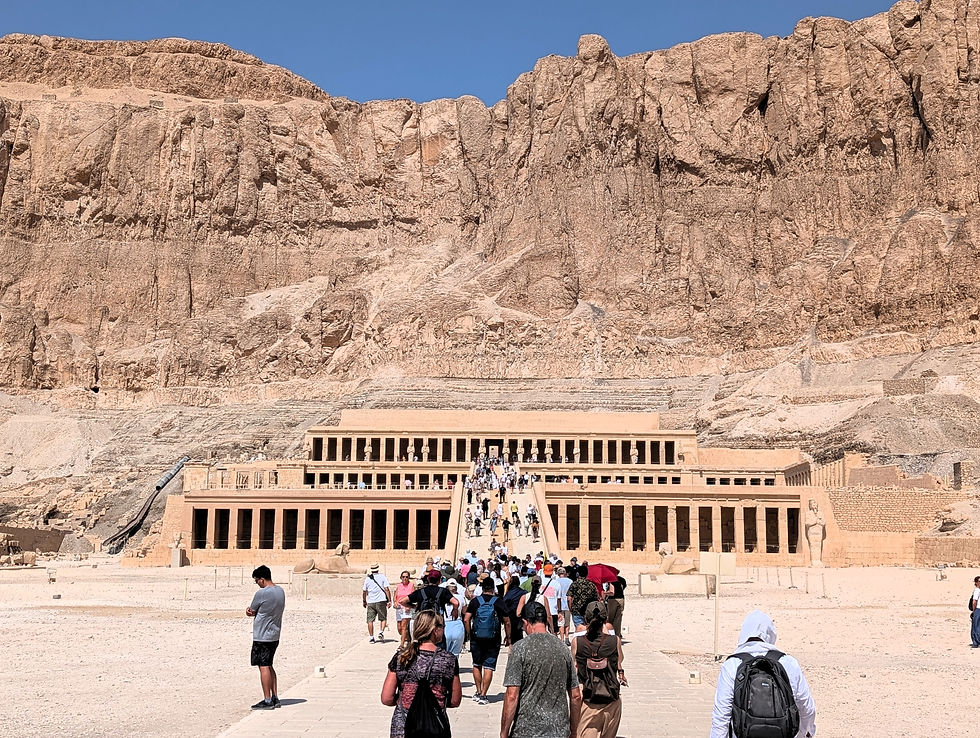
Seeing the temple in person is an unforgettable experience—the dramatic backdrop of the limestone cliffs makes it feel almost sculpted from the mountain itself. The symmetry and elegance of the terraces are breath-taking, and the reliefs are remarkably well-preserved, especially those showing scenes of trade and offerings. The site is expansive, so take time to wander through the different levels and appreciate the artistry and engineering that went into its construction.
Colossi of Memnon Colossi of Memnon Colossi of Memnon Colossi of Memnon Colossi of Memnon Colossi of Memnon Colossi of Memnon Colossi of Memnon Colossi of Memnon Colossi of Memnon Colossi of Memnon Colossi of Memnon
Tailor-Made Top Tip:
Don’t miss the reliefs of the Punt expedition—they’re among the most unique in Egypt.
The Valley of the Kings
The Valley of the Kings is one of the most famous archaeological sites in the world, serving as the burial ground for Egypt’s New Kingdom pharaohs and nobles. Nestled in the stark desert hills on Luxor’s West Bank, this UNESCO World Heritage site contains over 60 tombs, each carved deep into the limestone and decorated with vivid scenes from the Book of the Dead and other funerary texts. These tombs were designed to ensure safe passage to the afterlife, and their artistry and engineering remain astonishing even after more than 3,000 years.

During my visit, I explored five tombs: Rameses IV, Rameses IX, Rameses VII, Merenptah, and the world-famous Tutankhamun. Each offered something unique—Rameses IV’s tomb impressed with its vast size and colourful ceiling, while Rameses IX featured intricate wall scenes depicting the journey through the underworld. Tutankhamun’s tomb, though smaller, is iconic for its historical significance and the chance to see the young pharaoh’s mummy in situ. Merenptah’s tomb felt grand and imposing, with deep corridors and detailed carvings, and Rameses VII’s tomb, though more modest, provided a fascinating glimpse into the later period of royal burials.
Tomb of Rameses IV
Tomb of Rameses IV Tomb of Rameses IV Tomb of Rameses IV Tomb of Rameses IV Tomb of Rameses IV Tomb of Rameses IV Tomb of Rameses IV Tomb of Rameses IV Tomb of Rameses IV
Tomb of Rameses IX
Tomb of Rameses IX Tomb of Rameses IX Tomb of Rameses IX Tomb of Rameses IX Tomb of Rameses IX Tomb of Rameses IX Tomb of Rameses IX
Tomb of Rameses VII
Tomb of Rameses VII Tomb of Rameses VII Tomb of Rameses VII Tomb of Rameses VII Tomb of Rameses VII
Tomb of Merenptah
Tomb of Merenptah Tomb of Merenptah Tomb of Merenptah Tomb of Merenptah Tomb of Merenptah
Tomb of Tutankhamun
Tomb of Tutankhamun Tomb of Tutankhamun Tomb of Tutankhamun Tomb of Tutankhamun Tomb of Tutankhamun Tomb of Tutankhamun Tomb of Tutankhamun
Tailor-Made Top Tip:
Standard entry ticket includes three tombs, and you can choose which tombs to visit. The exception is the Tomb of Tutankhamun, which requires an additional ticket. Plan ahead if you want to see it.
Valley of the Kings Valley of the Kings Valley of the Kings
If you are enjoying this list, remember and subscribe to my mailing list to receive my latest blog posts.
Alabaster Workshops
Between the Valley of the Kings and the Mortuary Temple of Hatshepsut, you’ll find a cluster of alabaster workshops and shops—a tradition that dates back to ancient Egypt, when alabaster was prized for statues and vessels. These family-run businesses keep the craft alive and visiting one offers a fascinating glimpse into the skill behind this beautiful stonework. The workshops are filled with gleaming vases, figurines, and decorative pieces, all carved from creamy alabaster sourced from nearby quarries.

Alabaster Workshop Alabaster Workshop Alabaster Workshop
I stopped at one of these workshops during my West Bank tour, and it was a real highlight. The artisans gave a live demonstration of how raw alabaster is shaped and polished using traditional tools and techniques. They even encouraged visitors to try their hand at the process, which added a fun, interactive element to the experience. It’s a great way to appreciate the craftsmanship behind the souvenirs you see in the shops—and to take home something truly authentic.
Alabaster Workshop Alabaster Workshop Alabaster Workshop
Tailor-Made Top Tips:
Prices vary, so feel free to browse and compare. Genuine alabaster is heavier and cooler to the touch than imitations.
Smaller workshops often prefer cash payments, so bring some Egyptian pounds.
Alabaster Workshop Alabaster Workshop
Other Attractions and Experiences in Luxor
Beyond the major sites, Luxor offers plenty of additional highlights to enrich your visit. On the East Bank, the Luxor Museum showcases exquisite artifacts, including statues and items from Tutankhamun’s tomb, while the bustling souks provide a colourful taste of local life. On the West Bank, you can explore the Valley of the Queens, the workers’ village at Deir el-Medina, and the beautifully decorated tombs at the Tombs of the Nobles. These places to see in Luxor complement the main temples perfectly. For something truly memorable, consider a sunrise hot air balloon ride over the Nile and the Theban hills—an experience that offers breath-taking views of the temples and desert landscape. When deciding what to do in Luxor, add to this the chance to enjoy a traditional felucca ride on the Nile or relax in a riverside café, and you’ll find that Luxor is far more than just its famous monuments.
How to Get to Luxor
Luxor is well-connected and easy to reach, whether you’re coming from Cairo, Aswan, or even further afield. The quickest option is by air—Luxor International Airport has daily flights from Cairo (about 1 hour) and regular connections from major cities like Hurghada and Sharm El Sheikh. International flights also arrive from Europe and the Middle East, making Luxor accessible for overseas visitors.
If you prefer to travel by train, Egypt’s rail network offers comfortable services between Cairo and Luxor, with journey times of 9–10 hours on standard trains and slightly less on express services. Trains also run from Aswan (around 3 hours) and are a scenic way to experience the Nile Valley. For those who enjoy road travel, buses and private transfers are available from Cairo (approximately 8–9 hours) and from Hurghada (about 4 hours), though be prepared for long stretches of desert road.
For a truly memorable experience, consider a Nile cruise. These multi-day journeys between Luxor and Aswan combine transportation with sightseeing, allowing you to visit temples along the river while enjoying the comfort of a floating hotel. Cruises typically take 3–5 days, depending on the itinerary, and are a popular way to soak up the beauty of the Nile.
The Valley of the Kings The Valley of the Kings The Valley of the Kings The Valley of the Kings
Quick Questions Answered
What’s the best time to visit Luxor? Luxor’s hot desert climate means timing your visit makes a big difference. When planning which things to visit in Luxor, the best months are October to April, when daytime temperatures of 20–30°C make exploring temples and tombs far more comfortable. Winter (December to February) offers the coolest weather but also the biggest crowds and higher prices, while the shoulder seasons (March–April and October–November) provide a great balance of pleasant temperatures and fewer visitors. From May to September, the heat becomes extreme, often exceeding 40°C, making outdoor sightseeing much more challenging.
How many days do I need in Luxor? Most travellers find that 2–3 full days is ideal for exploring Luxor’s main sites at a comfortable pace. This allows time to experience the key attractions in Luxor across the East Bank (Karnak Temple and Luxor Temple) and the West Bank (Valley of the Kings, Hatshepsut’s Temple, and the Colossi of Memnon), plus a few additional experiences such as a museum visit or a hot air balloon ride.
Is Luxor safe for tourists? Yes—Luxor is generally considered very safe for visitors. Tourism is vital to the local economy, and security around major sites is well‑organised. As always, use common sense, stay aware of your surroundings, and follow local advice.
The Mortuary Temple of Hatshepsut The Mortuary Temple of Hatshepsut The Mortuary Temple of Hatshepsut
What should I wear when visiting temples? Light, breathable clothing is best, along with comfortable walking shoes. While there isn't a strict dress code, modest clothing—covering shoulders and knees—is respectful and appreciated, especially in religious areas. A hat and sunglasses are essential in the strong sun.
Is it better to stay on the East Bank or West Bank? The East Bank is more convenient, with larger hotels, restaurants, and easy transport links. The West Bank is quieter and more traditional, ideal for travellers wanting a peaceful stay close to the tombs and temples. Both offer great options depending on your style of travel.
Do I need a guide in Luxor? While sites can be explored independently, hiring a licensed guide (or joining a tour) can hugely enhance your experience. Many temples and tombs are rich in symbolism, and a good guide brings the stories to life.
Temple of Karnak Temple of Karnak Temple of Karnak
Can I buy tickets for the sites in advance? Some tickets can be purchased online, while others—especially the West Bank tombs—are bought at the official ticket offices. Opening hours and availability can vary, so arriving early is recommended.
Is a hot air balloon ride worth it? Absolutely! A sunrise hot air balloon ride over the West Bank is one of Luxor’s most memorable experiences, offering breath-taking aerial views of the temples, river, and desert landscape. It’s popular, so booking in advance is advised.
What’s the best way to get around Luxor? Taxis and private drivers are the easiest options. The East and West Banks are connected by bridges and ferries, and many travellers hire a driver for a half‑day or full‑day West Bank tour. Walking is possible around some East Bank areas, but distances between major sites can be long.
Valley of the Kings Valley of the Kings Valley of the Kings
Conclusion
Luxor isn't just a destination—it's a journey through time that connects you directly with one of history's greatest civilisations. From the towering columns of Karnak to the hidden treasures of the Valley of the Kings, every site tells a story of ambition, artistry, and devotion that's survived thousands of years. I left Luxor with a deeper appreciation for Egypt's incredible legacy and a memory bank full of unforgettable moments—and I'm confident you will too. Whether you spend two days or a week exploring these ancient wonders, Luxor rewards curiosity, patience, and a sense of adventure. Pack your sunhat, charge your camera, and get ready for one of the most remarkable experiences of your travels.

Accommodation in Luxor Egypt
Luxor offers a wide range of accommodation to suit every kind of traveller—from luxury seekers dreaming of Nile‑side elegance to budget adventurers looking for simple, friendly local stays. Whether you prefer to base yourself on the lively East Bank or enjoy the quieter, more traditional atmosphere of the West Bank, you’ll find plenty of comfortable and convenient options. Many hotels offer beautiful views of the Nile, relaxing pools for cooling off after long sightseeing days, and easy access to the temples and tombs that make Luxor so unforgettable. Below is a curated selection of stays that cater to different budgets—ideal for planning your perfect trip.
Luxury – For a Truly Special Stay
Sofitel Winter Palace Luxor
If you’re looking to indulge, this iconic historic hotel offers opulent rooms, lush gardens, and world‑class service—all just a short stroll from Luxor Temple. Its Nile‑facing terraces make it the perfect place to unwind after a day of exploring.
Mid‑Range – Comfort and Convenience
Steigenberger Nile Palace
A fantastic option for those wanting modern amenities without the luxury price tag. The rooms are spacious, the riverside pool is ideal for escaping the heat, and its location makes sightseeing effortless.
Budget – Affordable, Friendly, and Authentic
Nile Valley Hotel (West Bank)
A welcoming, great‑value hotel with a rooftop restaurant overlooking the river. It’s perfectly positioned for exploring West Bank sites and offers a quieter, more local feel than the busy East Bank.
A Charming Local Experience
Al Moudira Hotel
Set further out near the West Bank’s desert edge, this boutique property blends Arabian architecture with peaceful courtyards and artistic décor. It’s ideal for travellers seeking ambience, style, and tranquillity.
Temple of Luxor Temple of Luxor Temple of Luxor
Related Blog Posts
If you would like more information on Egypt and how to visit its treasures, please view the Tailor-Made Itineraries posts below:
Have you visited the Pyramids of Saqqara, or are you planning your trip? I'd love to hear about your experiences, questions, or travel tips—leave a comment below and let's keep the conversation going!
Don’t forget that Tailor-Made Itineraries delights in creating bespoke self-guided tours. So, if experiencing these things to do in Luxor appeals to you, reach out to me by email. I would be more than happy to design a self-guided tour around your requirements incorporating the attractions of Luxor, or indeed, a general tour of Egypt.
Tailor-Made Itineraries posts every two weeks, and you can subscribe to the latest blog and newsletter here. Until then, happy reading and safe travels.
Barry
Contact Me: tailoritineraries@gmail.com
Tailor-Made Itineraries create one-of-a-kind bespoke self-guided travel itineraries for adventurous and curious travellers.
These self-guided tours deliver a personalised and exciting holiday experience that takes the effort out of trip planning.
Luxor Egypt Map



Comments