


The Tailor-Made Guide to Things to do in Edinburgh Scotland

Author: Barry Pickard
Hi, I'm Barry, the owner of Tailor-Made Itineraries and I have been designing bespoke self-guided tours for adventurous and curious travellers since 2015. I am a history graduate with a passion for travel.
I created this blog to show, through my own adventures, how you can have an incredible travel experience as an independent traveller, giving you the information to navigate the world with confidence.

Contents
What are the best things to do in Edinburgh Scotland?
The smell hits you first. It’s a cool, faintly peaty air drifting in from the Firth of Forth, layered with something older — centuries of stone, rain and woodsmoke that seem to seep from the very walls of the Old Town. Then comes the sound: the low drone of bagpipes somewhere near the castle esplanade, the clip of footsteps on wet cobblestones, and the distant rumble of trams on Princes Street. Open your eyes and you’re looking up at a castle perched on a plug of ancient volcanic rock, its silhouette sharp against a shifting Scottish sky. Welcome to Edinburgh — one of the most dramatically beautiful cities in the world, and a place I keep coming back to.

So, what are the best things to do in Edinburgh Scotland? I’m glad you asked. The short answer: Edinburgh Castle, The Royal Mile, Arthur’s Seat, the National Museum of Scotland, Edinburgh Zoo, Greyfriars Kirkyard, Calton Hill, and the Royal Yacht Britannia — plus a whole lot more that I’m going to walk you through in detail below. You’ve found the right article.
I’m Barry, the founder of Tailor-Made Itineraries. I’ve been designing bespoke self-guided tours for independent travellers since 2015, and I’ve lost count of how many times I’ve walked Edinburgh’s closes, climbed its hills, and sat in its cafes with a map and a flat white. I’m also a history graduate, which means I can’t walk past a building without wanting to know its story. Everything in this guide is based on my own first-hand experience — no filler, no padding, no recycled internet lists.

This guide is written specifically for independent travellers — people who’d rather plan their own adventure than be herded around on a coach tour. If that’s you, you’re in the right place. I’ll give you the Edinburgh things to do that I’d recommend to a friend: honest, practical, and ordered to help you make the most of your time.

Not sure where to start in a city that packs this much into a relatively compact area? Don’t worry — that’s exactly the problem this guide solves. By the time you reach the end, you’ll know the must-see in Edinburgh, the hidden gems worth hunting down, and the practical tips that’ll save you time, money and frustration. Let’s go.

Don’t forget that Tailor-Made Itineraries delights in creating bespoke self-guided tours. So, if visiting any of these attractions and activities appeals to you, reach out to me by email. I would be more than happy to design a self-guided tour around your requirements incorporating the exciting things to do in Edinburgh Scotland or indeed, a general tour of this fascinating country.

Disclosure: This post contains affiliate links. Regardless of this, please be advised that all opinions expressed in this blog post are genuine and authentically my own.
About Edinburgh
Edinburgh is one of those cities that doesn’t need much of a sales pitch. It is Scotland’s capital, its political and cultural heart, and — in the opinion of many who’ve visited — one of Europe’s most visually arresting urban landscapes. Built across a series of hills and ridges in the Lothians, the city looks like it was designed by a novelist: a medieval fortress on a volcano, a Georgian grid of elegant streets, and ancient closes threading between buildings that lean towards each other like old friends sharing a secret.

The city’s history stretches back well over a thousand years. Edinburgh grew up around its famous castle, which has guarded this volcanic rock since at least the 12th century — though there is evidence of fortifications far older. For centuries, it was a city of two halves: the densely packed, often chaotic Old Town, with its towering tenements known as ‘lands’, and the planned Georgian elegance of the New Town, built from the 1760s onwards to give Edinburgh’s wealthy citizens somewhere to breathe. Today, both halves are UNESCO World Heritage Sites, and walking between them — via The Mound, or down any of the connecting streets — is to move through centuries of architectural ambition in a matter of minutes.

Edinburgh also carries a formidable intellectual and literary legacy. This is the city of David Hume and Adam Smith, of Robert Burns (who came here to publish his poems) and, of course, Sir Walter Scott, who single-handedly reshaped Scotland’s romantic image for the rest of the world. More recently, it gave us Muriel Spark, Irvine Welsh and J.K. Rowling, who reportedly wrote parts of the Harry Potter series in a Grassmarket café with a view of Greyfriars Kirkyard. The Edinburgh attractions rooted in this literary history alone could fill a weekend.

Today, Edinburgh is a city of roughly 500,000 people, though it swells considerably every August when the world’s largest arts festival — the Edinburgh Festival Fringe — takes over its streets, pubs and theatres. But outside of festival season, Edinburgh is a wonderfully walkable, navigable city that rewards the curious, the unhurried and the independently-minded traveller. Which, if you’re reading this, is almost certainly you.

But here’s the thing: Edinburgh doesn’t just reward the visitor who ticks off the big sights. Its real magic is in the details — the hidden closes, the unexpected museum, the view you stumble on when you take the wrong turn. That’s exactly what this guide is here to help you find.


Things to do in Edinburgh Scotland
National Museum of Scotland
The National Museum of Scotland is one of the most rewarding Edinburgh attractions, offering an impressive overview of Scotland’s story alongside global cultures, science, design and innovation. Its galleries effortlessly move from prehistoric artefacts and medieval weaponry to fashion, technology and natural history. Highlights include the Lewis Chessmen, Dolly the Sheep and jaw-dropping dinosaurs, making it appealing to all ages. Architecturally, the museum blends a grand Victorian hall with sleek modern spaces, creating a light‑filled, welcoming environment that invites exploration without feeling overwhelming.

Tailor‑Made Tip: Entry to the museum is free, so if you are looking for a cheap morning or afternoon’s activity – and one of the best indoor activities in Edinburgh - then this museum is perfect for you.
National Museum of Scotland National Museum of Scotland National Museum of Scotland National Museum of Scotland National Museum of Scotland National Museum of Scotland National Museum of Scotland National Museum of Scotland
Edinburgh Castle
Edinburgh Castle sits high above the city on an extinct volcanic plug, shaping both the skyline and Scotland’s national identity. Exploring the castle reveals centuries of royal drama, military conflict and ceremony, from the Scottish Crown Jewels to the Great Hall and St Margaret’s Chapel. The battlements offer spectacular views across the city and beyond, reinforcing why this was the most strategically important site in medieval Scotland. It’s a powerful, immersive introduction to Scottish history, and a genuine must see in Edinburgh.

Tailor‑Made Tip: Visit early morning or late afternoon to avoid peak crowds and allow time to explore quieter corners inside the fortress walls. It is also advisable to buy your ticket online to avoid the ticket counter queues.
Edinburgh Castle Edinburgh Castle Edinburgh Castle Edinburgh Castle
Camera Obscura and World of Illusions
Camera Obscura and World of Illusions is Edinburgh’s most playful attraction, combining Victorian science with modern hands‑on fun. At the top of the tower, the historic Camera Obscura uses mirrors and lenses to project a live, moving image of the city onto a viewing table. Below, five floors of optical illusions, puzzles and interactive rooms challenge perception and spark curiosity. It’s a lively contrast to nearby historic sites and especially popular with families – one of the most fun activities in Edinburgh for all ages.
Tailor‑Made Tip: Start at the top with the Camera Obscura show, then work your way down to avoid missing any exhibits.
Camera Obscura and World of Illusions Camera Obscura and World of Illusions Camera Obscura and World of Illusions
The Royal Mile
The Royal Mile is the road that stretches from Edinburgh Castle to the Palace of Holyroodhouse and forms the historic heart of the Old Town. Walking its length reveals layers of Edinburgh’s past, from medieval tenements and hidden closes to historic taverns, museums and places of worship. The street has witnessed royal processions, public punishment and everyday city life for centuries. Exploring its narrow side streets is just as rewarding as following the main route, revealing surprising courtyards and hidden viewpoints. It’s one of the unmissable places to visit in Edinburgh.

Tailor‑Made Tip: Allow time to wander the closes off the main street – some of the Royal Mile’s most memorable moments lie just steps away.
The Royal Mile The Royal Mile The Royal Mile
Palace of Holyroodhouse
The Palace of Holyroodhouse marks the formal end of the Royal Mile and serves as the monarch’s official residence in Scotland. Visitors can explore elegant state apartments filled with artwork and period furnishings, as well as rooms associated with Mary, Queen of Scots, whose dramatic story looms large here. Outside, the ruins of Holyrood Abbey sit against the dramatic backdrop of Arthur’s Seat. The palace offers a striking contrast to the fortress‑like power of Edinburgh Castle, and is one of the most historically rich places to see in Edinburgh.
Tailor‑Made Tip: Check opening dates carefully, as access can be restricted during royal visits and official events.
Holyrood Abbey Holyrood Abbey Palace of Holyroodhouse
If you are enjoying this list, remember and subscribe to my mailing list to receive my latest blog posts.
Museum of Edinburgh
Housed in historic buildings near the Canongate, the Museum of Edinburgh tells the story of the city through its people, trades and traditions. Exhibits range from decorative arts and everyday objects to musical instruments and civic artefacts, including items connected to the city’s governance and social life. The museum offers a quieter, more local perspective on Edinburgh’s history, complementing the grand narratives found elsewhere in the Old Town.
Tailor‑Made Tip: This is an ideal stop while walking the lower Royal Mile, especially if you want to escape the busiest crowds.

Johnnie Walker Princes Street Experience
The Johnnie Walker Princes Street Experience is a modern, immersive attraction celebrating one of Scotland’s most recognisable whisky brands. Set across several floors with panoramic views over Edinburgh Castle, the experience focuses less on traditional distilling and more on flavour, storytelling and personal preference. Guided, interactive tours introduce visitors to whisky in an accessible way, making it welcoming for newcomers while still engaging for enthusiasts. The rooftop bar is a highlight, offering inventive whisky‑based cocktails paired with one of the best castle viewpoints in the city.
Johnnie Walker Princes Street Experience Johnnie Walker Princes Street Experience Johnnie Walker Princes Street Experience Johnnie Walker Princes Street Experience
Tailor‑Made Tip: Book a late‑afternoon experience to enjoy cocktails at sunset with castle views from the rooftop bar.
Johnnie Walker Princes Street Experience Johnnie Walker Princes Street Experience Johnnie Walker Princes Street Experience
Wait, it gets better: we’re only halfway through Edinburgh’s highlights and there’s still a volcanic summit, a royal yacht and one of the most beautiful streets in Britain still to come. Keep reading.
St Giles’ Cathedral
St Giles’ Cathedral, often called the High Kirk of Edinburgh, has stood at the spiritual heart of the city for nearly a millennium. Its interior reveals a blend of architectural styles, richly coloured stained glass and historic chapels, including the ornate Thistle Chapel. The cathedral played a significant role during the Scottish Reformation and remains an active place of worship today. Its central Royal Mile location makes it an easy but rewarding cultural stop and one of the best sights in Edinburgh.

Greyfriars Church and Graveyard
Greyfriars Kirk and its surrounding graveyard are steeped in history and atmosphere. The kirkyard is best known for the story of Greyfriars Bobby, but it also contains graves linked to major figures in Edinburgh’s past and darker chapters of Scottish history. Weathered headstones, winding paths and mature trees create a reflective setting. The area is closely associated with Edinburgh’s literary heritage, adding another layer to an already evocative place – making it one of the truly must visit places in Edinburgh.

Tailor‑Made Tip: Find the memorials to Thomas Riddell, Elizabeth Moodie and William McGonagall, and discover JK Rowling’s inspiration for three of her memorable characters.
Elizabeth Moodie Thomas Riddell William McGonagall
If you are enjoying this list, remember and subscribe to my mailing list to receive my latest blog posts.
Other Edinburgh Churches
Beyond St Giles’, Edinburgh’s churches offer architectural beauty and peaceful spaces away from busy sightseeing routes. St Mary’s Episcopal Cathedral impresses with its neo‑Gothic design and generous interior, while St Cuthbert’s occupies a surprisingly tranquil spot beneath the castle. Canongate Kirk links strongly to royal history, and the Church of St John the Evangelist adds refinement to the west end. Together, they reveal the city’s diverse religious and architectural heritage and offer some of the best free places to go in Edinburgh.
Tailor‑Made Tip: Pop inside wherever doors are open – the churches are free to enter and reward even brief visits.
Canongate Kirk Church of St John the Evangelist St. Mary's Cathedral
Port of Leith Distillery
The Port of Leith Distillery is a striking vertical distillery located in Leith’s historic docks, representing Edinburgh’s modern whisky revival. Spread across multiple levels, the distillery offers guided tours that explain the whisky‑making process from grain to glass, all while showcasing impressive harbour views. Tastings allow visitors to sample spirits at different stages, including new‑make and matured expressions. Its contemporary design and waterfront setting make it a fascinating contrast to more traditional rural distilleries.

Tailor‑Made Tip: Combine your visit with lunch or drinks at the Distillery Bar while enjoying panoramic views of Leith harbour.
Port of Leith Distillery Port of Leith Distillery Port of Leith Distillery
Museum on the Mound
Housed within the historic Bank of Scotland headquarters, the Museum on the Mound explores the story of money, banking and economics in Scotland. Interactive displays explain how currency evolved and how financial decisions affect everyday life. Original vaults and architectural details add depth to the experience. It’s compact but engaging, offering a thoughtful pause between exploring the Old Town and strolling along Princes Street in the New Town.
Museum on the Mound Museum on the Mound
Tailor‑Made Tip: Combine your visit with a walk down the Mound for one of the city’s most dramatic elevation changes.
Grassmarket
Once a medieval marketplace and site of public executions, the Grassmarket today is a lively social hub beneath Edinburgh Castle’s towering rock face. Its cobbled square is lined with cafés, pubs and independent shops, making it an enjoyable place to pause after exploring the Old Town. The area’s history is woven into its surroundings, while its modern energy keeps it feeling vibrant and welcoming throughout the day and evening – making it one of the most cool places to visit in Edinburgh.

National Library of Scotland
The National Library of Scotland houses millions of books, maps, manuscripts and images relating to Scotland’s heritage. While primarily a research institution, it regularly hosts excellent public exhibitions that bring stories of literature, politics and culture to life. The galleries are thoughtfully presented and free to enter. Quiet reading rooms and architectural details give the building an academic, reflective atmosphere that contrasts nicely with nearby tourist sites.

Tailor‑Made Tip: Check current exhibitions in advance – displays change often and are consistently well curated.
If you are enjoying this list, remember and subscribe to my mailing list to receive my latest blog posts.
Arthur’s Seat
Arthur’s Seat rises dramatically above Holyrood Park and offers one of the most rewarding viewpoints in Edinburgh. This extinct volcano is accessible via several paths, ranging from gentle slopes to steeper climbs. From the summit, sweeping views stretch across the city, coastline and surrounding countryside. The walk offers a sense of wilderness surprisingly close to the city centre, making it a favourite what to see in Edinburgh recommendation for all active visitors.


Tailor‑Made Tip: Wear sturdy footwear and check the wind forecast – conditions can change quickly near the top.
Arthur’s Seat Arthur’s Seat Arthur’s Seat
The Scottish Parliament
The Scottish Parliament building marks the political heart of modern Scotland and sits in striking contrast to the historic Old Town. Its distinctive architecture was designed to reflect landscape and democratic transparency. Free guided tours explain how the devolved parliament works and showcase debating chambers and public spaces. Even without a tour, the building’s location at the foot of Arthur’s Seat makes it worth visiting as part of a Holyrood walk.

Fruitmarket Gallery
The Fruitmarket Gallery is a hub for contemporary art near Waverley Station. Known for championing emerging and international artists, it presents thought‑provoking exhibitions across two connected spaces. The gallery plays an important role in keeping Edinburgh’s cultural scene dynamic and forward‑looking. With free entry and regularly changing displays, it’s an easy addition to any itinerary and one of the best places to visit in Edinburgh for contemporary art lovers.
Fruitmarket Gallery Fruitmarket Gallery Fruitmarket Gallery
Victoria Street
Victoria Street’s colourful, curved architecture makes it one of Edinburgh’s most instantly recognisable streets. Lined with independent shops, cafés and artisan stores, it provides a lively link between the Royal Mile and the Grassmarket. Walking its full length reveals changing perspectives and views, particularly down towards the castle rock. Its character and charm have made it a favourite inspiration for fictional streets and photography alike – easily one of the Edinburgh sights to see that will stop you in your tracks.

Greyfriars Bobby Statue
Tucked near Greyfriars Kirk, the statue of Greyfriars Bobby commemorates the famously loyal dog who reportedly guarded his owner’s grave for years. Small in size but rich in sentiment, it reflects Edinburgh’s affection for storytelling and folklore. The statue forms part of a wider historic setting that includes the churchyard and surrounding streets, offering more depth than a simple photo stop.

Dean Village
Dean Village feels a world away from the busy city centre, despite being only a short walk from Princes Street. Once a milling community, its riverside setting, stone buildings and gentle paths create a peaceful atmosphere. The Water of Leith flows quietly through the village, enhancing its storybook charm. It’s ideal for slowing the pace and appreciating a different side of Edinburgh life – one of those Edinburgh tourist spots that feels like a genuine local discovery.

Edinburgh Zoo
Set on a hillside to the west of the city, Edinburgh Zoo is home to animals from around the world, with a strong emphasis on conservation and education. Spacious enclosures and informative signage encourage thoughtful observation rather than spectacle. The elevated setting offers occasional city views, while landscaped paths make exploring enjoyable. It’s a rewarding visit for wildlife enthusiasts and families alike.

Tailor‑Made Tip: Check daily feeding times online before you go to plan your route efficiently.
Edinburgh Zoo Edinburgh Zoo Edinburgh Zoo Edinburgh Zoo Edinburgh Zoo Edinburgh Zoo
Here’s what most visitors miss: Edinburgh’s galleries, gardens and green spaces are every bit as rewarding as its castles and closes — and they’re almost entirely free. If you only have time for a few, I’ve flagged the ones I’d choose.
Scottish National Gallery of Modern Art Two (Dean Gallery)
Modern Art Two focuses on modern sculpture, Dada and Surrealism, housed in a serene neoclassical building. The galleries feel contemplative, allowing space to engage with challenging ideas and artworks. Outside, the surrounding garden and sculpture trail connect the gallery naturally to its sister site nearby. It’s a quieter, reflective experience that balances Edinburgh’s more traditional cultural attractions.

Tailor‑Made Tip: Allow time to walk between the two Modern Art galleries through the landscaped grounds.
Scottish National Gallery of Modern Art Two (Dean Gallery) Scottish National Gallery of Modern Art Two (Dean Gallery) Scottish National Gallery of Modern Art Two (Dean Gallery)
Scottish National Gallery of Modern Art One
Modern Art One showcases international modern and contemporary art within a bright, spacious former school building. Exhibitions change regularly, often mixing major names with emerging voices. The atmosphere is relaxed and welcoming, making contemporary art accessible to all visitors. Together with Modern Art Two, it demonstrates Edinburgh’s commitment to contemporary culture alongside its historic collections.

Tailor‑Made Tip: Visit both galleries on the same day for a full picture of what to do in Edinburgh Scotland when it comes to its art scene.
Scottish National Gallery
Located on Princes Street, the Scottish National Gallery holds an outstanding collection spanning Renaissance to early modern art. Highlights include works by Titian, Turner and leading Scottish artists. The gallery’s grand yet approachable layout encourages both focused viewing and casual exploration. Free entry makes it an essential cultural stop, offering context and beauty at the heart of the city and one of the best sights in Edinburgh for art lovers.

Scottish National Gallery Scottish National Gallery Scottish National Gallery
Princes Street Gardens
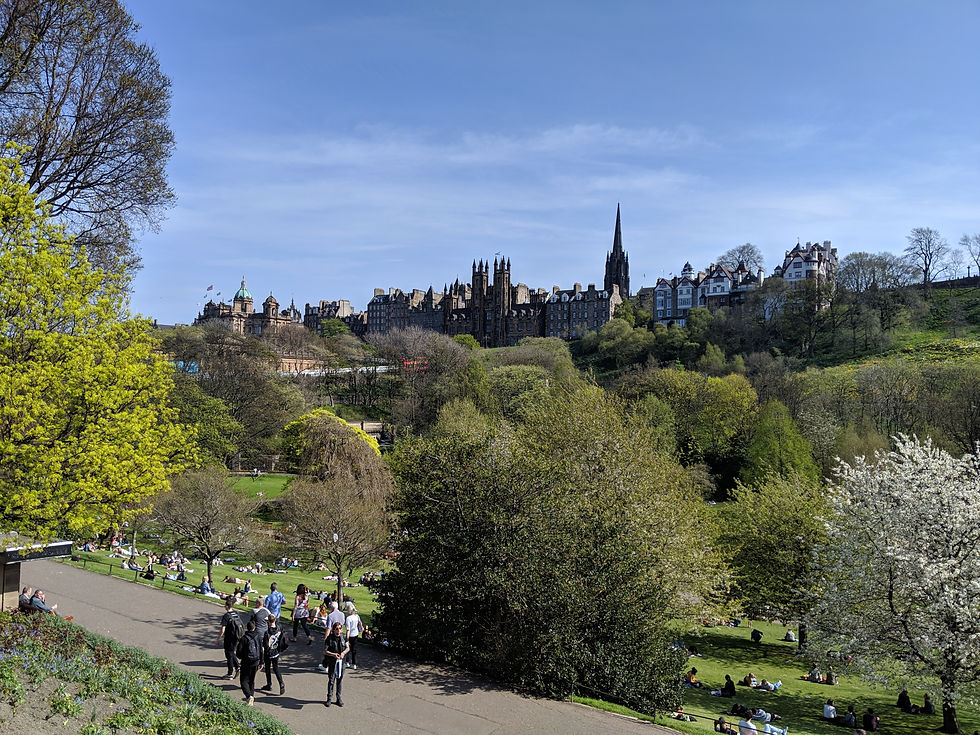
Princes Street Gardens stretch along the valley below Edinburgh Castle, creating a green corridor through the city centre. Once a polluted loch, the landscaped gardens now offer flowerbeds, paths and viewpoints framed by historic landmarks. They provide a welcome break from urban exploration and are ideal for picnics, strolls or photos of the castle rising above – and among the most beloved best places to go in Edinburgh for a quiet moment.
Water of Leith Walkway
The Water of Leith Walkway follows the river through some of Edinburgh’s most scenic and lesser‑known neighbourhoods. Sections pass wooded paths, historic villages like Dean Village and lively areas such as Stockbridge. The walkway offers a peaceful way to explore the city on foot, away from traffic and crowds, while still revealing layers of history and daily life.

Calton Hill
Calton Hill offers panoramic views over Edinburgh, the Firth of Forth and beyond. Its collection of monuments, including the National Monument and Nelson Monument, give it a distinctive classical feel. Easily accessible from the city centre, it’s popular at sunrise and sunset when the light transforms the skyline. The hill feels open and dramatic, yet comfortably close to urban life – one of the genuinely must do in Edinburgh experiences for any visit.
Calton Hill Calton Hill Calton Hill
Tailor‑Made Tip: Visit near sunset for the best light and atmosphere.
Royal Botanic Garden
The Royal Botanic Garden provides 70 acres of beautifully maintained landscapes, plant collections and peaceful walking routes. From formal displays to informal woodland areas, the gardens offer year‑round interest. Glasshouses showcase exotic species, while open lawns and viewpoints invite rest and reflection. It’s an oasis of calm within walking distance of the city’s New Town, and one of the most special places to go in Edinburgh when you need to slow the pace.

Scott Monument
Rising dramatically from Princes Street Gardens, the Scott Monument honours Sir Walter Scott and celebrates Scotland’s literary heritage. Its intricate Gothic design dominates the view and rewards those who climb its narrow interior staircase with exceptional city vistas. The monument also houses small displays dedicated to Scott’s work, adding context to its imposing structure.

Brewery Tours and Tap Rooms
Edinburgh’s craft beer scene has grown rapidly, with independent breweries and tap rooms offering insight into modern Scottish brewing. Places like Newbarns and Campervan provide relaxed spaces to sample local beers and learn about brewing techniques. Brewery visits, like to Vault City in the Portobello district, add a contemporary flavour to city exploration and showcase Edinburgh’s creative energy beyond its historic image – and are among the most fun activities in Edinburgh, especially for those who enjoy the craft drinks culture.
Tailor‑Made Tip: Check opening times in advance – many tap rooms have limited days or hours.
Vault City Vault City Campervan Taproom Campervan Taproom Newbarns Taproom
Royal Yacht Britannia
Moored in Leith, the Royal Yacht Britannia offers a rare glimpse into royal life at sea. Once used by the British royal family, the yacht has been carefully preserved, allowing visitors to explore state rooms, private quarters and crew spaces. The experience feels intimate and informative, revealing both luxury and everyday routines aboard this floating residence – one of the finest Edinburgh attractions outside the city centre.
Royal Yacht Britannia Royal Yacht Britannia Royal Yacht Britannia Royal Yacht Britannia Royal Yacht Britannia
Tailor‑Made Tip: Use the included audio guide for deeper insight into life on board. Also, make sure to enjoy tea and scones at the yacht's tearoom.
Royal Yacht Britannia Royal Yacht Britannia Royal Yacht Britannia
Afternoon Tea at The Colonnades, Signet Library
Afternoon tea at The Colonnades offers one of Edinburgh’s most refined dining experiences. Set within a historic legal library, the elegant surroundings elevate the classic tea service. Beautifully presented pastries, sandwiches and scones are served in a space rich with character and calm. It’s a luxurious pause that blends literary heritage with indulgence, and one of the most memorable things to see in Edinburgh from a culinary and architectural perspective.

Tailor‑Made Tip: Book well ahead – tables are limited and demand is high year‑round.
The Colonnades, Signet Library The Colonnades, Signet Library The Colonnades, Signet Library
Craigmillar Castle
Craigmillar Castle offers a quieter, more contemplative castle experience just outside the city centre. Closely associated with Mary, Queen of Scots, its well‑preserved ruins allow visitors to explore towers, courtyards and battlements without the crowds of Edinburgh Castle. The setting provides insight into noble life and political intrigue, making it a rewarding alternative for history lovers and one of the lesser-known best places to visit in Edinburgh.

Newhailes House & Gardens
Located on the outskirts of Edinburgh, Newhailes House & Gardens offers a refined blend of architecture, landscape and Enlightenment‑era ambition. Built in the early 18th century for the Dalrymple family, the house is celebrated for its elegant interiors and remarkable collection of original furniture and decorative arts. Highlights include one of Scotland’s finest libraries, designed to impress as much as to educate. The surrounding grounds shift from formal avenues to woodland and open parkland, creating a peaceful escape that feels far removed from the city despite its proximity.

Newhailes House & Gardens Newhailes House & Gardens Newhailes House & Gardens
Travelling to Edinburgh
Edinburgh is well connected and easy to reach, making it an ideal city break or longer stay destination. Rail travel to Edinburgh is one of the most convenient and scenic options, with services arriving directly into the city centre at Edinburgh Waverley or Haymarket stations. For visitors travelling to Edinburgh from London, frequent direct trains run along the East Coast Main Line, typically taking around four and a half hours and offering spectacular coastal views along the way. Edinburgh also has an international airport with good UK and European connections, while driving provides flexibility for exploring surrounding regions such as the Highlands, Fife and the Borders.
Quick Questions Answered
What is the weather in Scotland Edinburgh like? Edinburgh has a cool, temperate climate with mild summers, cool winters and changeable weather year‑round, so it’s wise to expect sunshine, wind and rain all in one day.
What is the capital of Scotland? Edinburgh is the capital city of Scotland and the seat of the Scottish Parliament.
What is the population of Edinburgh? Edinburgh has a population of just over 500,000 people, making it Scotland’s second‑largest city after Glasgow.
Where is Edinburgh? Edinburgh is located on Scotland’s east coast, overlooking the Firth of Forth in the Central Belt of the country.

What time is it in Edinburgh? Edinburgh operates on UK time: Greenwich Mean Time (GMT) in winter and British Summer Time (BST) in summer.
Are there ghost tours in Edinburgh Scotland? Yes, Edinburgh is famous for its ghost tours, with guided walks through graveyards, underground vaults and historic closes.
What’s the best time to visit Edinburgh? Late Spring and early autumn are ideal for pleasant weather and fewer crowds, while August is lively but very busy due to festivals.
How many days in Edinburgh would be enough for a visit? Three days is enough to see the main highlights, while four or five days allows time for museums and nearby excursions.
How big is Edinburgh? Edinburgh is compact and walkable, with most major attractions located within a relatively small city centre.
Victoria Street Victoria Street Victoria Street
What’s the pronunciation of Edinburgh? Edinburgh is commonly pronounced “ED‑in‑bruh,” not “ED‑in‑burg.”
Which city should you visit Edinburgh or Glasgow? Edinburgh is best for history and scenery, while Glasgow excels in music and modern culture; of course, my recommendation would always be to visit both.
Is Edinburgh worth visiting? Yes, Edinburgh is widely considered one of Europe’s most rewarding city destinations thanks to its history, architecture and atmosphere.
What to wear in Edinburgh? Dress in layers with comfortable walking shoes and a waterproof jacket, as weather conditions can change quickly.
What is Edinburgh known for? Edinburgh is known for its medieval Old Town, elegant Georgian New Town, dramatic castle, literary heritage and world‑famous festivals.
National Museum of Scotland National Museum of Scotland National Museum of Scotland
Conclusion
Edinburgh is, quite simply, one of the great cities of the world — and I say that as someone who’s spent over a decade helping independent travellers find the places that make a destination truly memorable. Whether you spend a long weekend or a full week here, you’ll leave with images that stay with you: the castle catching the last of the evening light, the smell of rain on warm cobblestones, the view from Calton Hill that makes you understand exactly why people have been writing about this city for centuries. The Edinburgh things to do in this guide cover the breadth of what the city offers — from world-class museums and landmark sights to quiet riverside walks and unexpected literary connections. And remember, we’ve only scratched the surface. Every Edinburgh tourist attraction has its own story, its own atmosphere, its own reason to linger a little longer than you planned. That’s the thing about Edinburgh — it always gives you a reason to come back.
National Museum of Scotland National Museum of Scotland National Museum of Scotland
Best hotels in Edinburgh Scotland
Edinburgh offers an exceptionally wide range of accommodation, from elegant five‑star landmarks and characterful boutique hotels to great‑value chains, welcoming guesthouses and even city‑edge campsites. Where you stay can strongly shape your experience: the Old Town offers atmosphere and history, while the New Town brings Georgian elegance and shopping, and neighbourhoods beyond the centre provide space, views and better value.
Hotels in Edinburgh City Centre
Staying in the city centre keeps you within easy walking distance of major attractions, restaurants and transport hubs. Many hotels in Edinburgh city centre balance convenience with historic surroundings.
Recommended options:
The Balmoral – a grand luxury hotel beside Waverley Station
Radisson Blu Hotel, Edinburgh City Centre – reliable comfort right on the Royal Mile
Apex Waterloo Place – modern style with spa facilities close to Princes Street

Edinburgh Hotels in Old Town
For atmosphere and history, Edinburgh hotels in Old Town place you among cobbled streets, medieval closes and iconic views. Expect characterful buildings, though rooms can be more compact.
Recommended options:
Market Street Hotel – contemporary design near the Royal Mile
Grassmarket Hotel – stylish and well located for nightlife
Edinburgh Hotels Near the Castle
If castle views top your wish list, Edinburgh hotels near the castle deliver location and drama. These hotels are ideal for first‑time visitors.
Recommended options:
The Witchery by the Castle – offering a range of opulent suites, each one unique with its own special features
Apex Grassmarket Hotel – castle‑facing rooms at a more accessible price

Hotels on Princes Street Edinburgh
Hotels on Princes Street Edinburgh offer dramatic views across Princes Street Gardens to the castle, alongside excellent transport links and shopping.
Recommended options:
Old Waverley Hotel – classic and perfectly positioned
easyHotel Edinburgh – dependable comfort with views
Boutique Hotels in Edinburgh Scotland
Boutique hotels in Edinburgh Scotland excel at blending style with storytelling, often housed in converted townhouses or historic buildings.
Recommended options:
The Raeburn (Stockbridge) – stylish, neighbourhood feel
Nira Caledonia – intimate luxury near the New Town
The Roseate Edinburgh – elegant West End retreat
Edinburgh Castle Edinburgh Castle Edinburgh Castle
Bed and Breakfast in Edinburgh Scotland
A bed and breakfast in Edinburgh Scotland is perfect for travellers seeking local charm, personal service and hearty Scottish breakfasts. Many are located just outside the busiest areas, offering calm and value.
Recommended options:
Edinburgh Camping Sites and Alternative Stays
For something different, Edinburgh camping sites and glamping options exist on the city’s edges, ideal for road‑trippers or nature lovers.
Recommended options:
Drummohr Camping & Glamping Site (East Lothian) – close to the city by train
Mortonhall Caravan & Camping Park – city views with countryside feel
Water of Leith Walkway Water of Leith Walkway Water of Leith Walkway
Related Blog Posts
If you would like more information on Edinburgh and the rest of Scotland and how to visit these locations, please view the Tailor-Made Itineraries posts below:
The Colonnades, Signet Library The Colonnades, Signet Library The Colonnades, Signet Library
Have you visited Edinburgh? I’d love to hear which of these attractions made your list — drop a comment below and share your own experience or tips with the Tailor-Made Itineraries community!
Don’t forget that Tailor-Made Itineraries delights in creating bespoke self-guided tours. So, if visiting any of these attractions and activities appeals to you, reach out to me by email. I would be more than happy to design a self-guided tour around your requirements incorporating the exciting things to do in Edinburgh Scotland or indeed, a general tour of this fascinating country.
Tailor-Made Itineraries posts every two weeks, and you can subscribe to the latest blog and newsletter here. Until then, happy reading and safe travels.
Barry
Contact Me: tailoritineraries@gmail.com
Tailor-Made Itineraries creates one-of-a-kind bespoke self-guided travel itineraries for adventurous and curious travellers.
These self-guided tours deliver a personalised and exciting holiday experience that takes the effort out of trip planning.
Edinburgh Tourist Map





Comments