


The Tailor-Made Guide to Art Nouveau and Art Deco Cities: Charles Rennie Mackintosh Architecture and Design in Glasgow
- Mar 19
- 18 min read

Disclosure: This post contains affiliate links. Regardless of this, please be advised that all opinions expressed in this blog post are genuine and authentically my own.
Author: Barry Pickard
Hi, I'm Barry, the owner of Tailor-Made Itineraries and I have been designing bespoke self-guided tours for adventurous and curious travellers since 2015. I am a history graduate with a passion for travel.
I created this blog to show, through my own adventures, how you can have an incredible travel experience as an independent traveller, giving you the information to navigate the world with confidence.
Contents

Have you ever walked through a city and felt like you were stepping inside a work of art? That's exactly what happens when you explore Charles Rennie Mackintosh architecture and design in Glasgow. Picture this: you're standing in the Willow Tea Rooms, surrounded by high-backed chairs that seem to reach toward the ceiling like abstract sculptures, while silvered gesso panels catch the afternoon light and scatter it across white walls. The faint clink of teacups mingles with hushed conversations, and you realize you're not just having afternoon tea—you're sitting inside a masterpiece created by Scotland's most celebrated Art Nouveau architect.

I'm Barry, and I've been designing bespoke self-guided tours since 2015, but my fascination with Mackintosh began long before that. As a history graduate with a passion for Mackintosh design, I've walked Glasgow's streets countless times, tracing the footsteps of this visionary Scottish architect who transformed his hometown into a living gallery. I've stood in rooms he designed over a century ago and felt that rare thrill when historical research meets tangible experience—when you can actually see how Charles Rennie Mackintosh designs bridge the gap between Victorian tradition and modern simplicity.

This guide is for independent travellers like you—curious explorers who want to dig deeper than the typical tourist trail and discover things to do in Glasgow Scotland that genuinely matter. Whether you're an architecture enthusiast, a design lover, or simply someone who appreciates beautiful spaces, I'll show you exactly where to find the best examples of Mackintosh architecture and Art Nouveau designs across the city. I've visited every location in this post personally (some multiple times), and I'll share the practical tips, historical context, and insider knowledge that'll help you make the most of your Mackintosh pilgrimage.

You won't find vague recommendations here—just honest, experience-based advice on things to visit in Glasgow and what to do in Glasgow to truly understand why Mackintosh's work still feels revolutionary today. From restored tea rooms to hidden churches, from world-class museums to a house wrapped in protective steel, each location tells part of the story of a man who dared to imagine something entirely new. So, grab your walking shoes, charge your camera, and let's explore the extraordinary world of Charles Rennie Mackintosh together.

Don’t forget that Tailor-Made Itineraries delights in creating bespoke self-guided tours. So, if visiting any of these masterpieces of Charles Rennie Mackintosh architecture and design appeals to you, reach out to me by email. I would be more than happy to design a self-guided tour around your requirements incorporating Mackintosh designs or indeed, a general tour of Art Nouveau and Art Deco gems.

Charles Rennie Mackintosh Facts
Charles Rennie Mackintosh (1868–1928) was born in Glasgow and became one of Scotland’s most celebrated architects and designers. He trained at the Glasgow School of Art, where his talent for blending traditional Scottish elements with modern ideas began to shine. Mackintosh’s style combined clean, geometric lines with delicate floral motifs, creating a distinctive look that bridged Art Nouveau and early Modernism. His work wasn’t limited to architecture—he designed furniture, textiles, and interiors, embracing the concept of “total design.” Today, his legacy lives on in Glasgow’s streets and museums, making the city a must-visit for design enthusiasts.

Margaret Macdonald Mackintosh
Margaret MacDonald was not just Mackintosh’s wife but his creative partner and muse. Born in England, she moved to Glasgow and studied at the Glasgow School of Art, where she met Charles. Together, they became central figures in the Glasgow Style movement. Margaret’s work often featured ethereal figures and symbolic motifs, adding a mystical quality to their joint projects. Her influence is evident in many of Mackintosh’s interiors, where her panels and decorative details bring warmth and personality. The couple married in 1900 and collaborated throughout their careers, leaving behind a body of work that feels both romantic and revolutionary.


Mackintosh in Glasgow
Glasgow was the canvas for Mackintosh’s greatest achievements. His most famous work, the Glasgow School of Art, remains an icon of modern architecture, despite fire damage in recent years. Visitors can also explore the Willow Tea Rooms, where Mackintosh’s elegant interiors create a timeless atmosphere, and the House for an Art Lover, a stunning interpretation of his designs built decades after his death. For a deeper dive, head to The Lighthouse, Scotland’s Centre for Design and Architecture, which celebrates Mackintosh’s vision. Walking through Glasgow, you’ll find traces of his genius everywhere—from furniture displays to entire buildings that shaped the city’s identity.

Mackintosh Art Nouveau and The Glasgow Style
Mackintosh’s work sits at the crossroads of global Art Nouveau and a uniquely Scottish interpretation known as the Glasgow Style. While Art Nouveau embraced organic curves and floral patterns, Mackintosh introduced a more restrained, geometric approach, influencing designers across Europe. His ideas paved the way for Art Deco, with its emphasis on clean lines and modernity. The Glasgow Style, championed by Mackintosh and the “Glasgow Four” (including Margaret MacDonald), blended symbolism, craftsmanship, and innovation, creating a movement that still feels fresh today. Visiting Glasgow offers a chance to see how this local style became part of a worldwide design revolution.

Charles Rennie Mackintosh Architecture and Design in Glasgow
Mackintosh at the Willow
Opened in 1903, Mackintosh at the Willow is the only surviving tea rooms out of four designed by Charles Rennie Mackintosh, making it one of Glasgow’s most treasured architectural gems. Commissioned by Miss Kate Cranston, a visionary entrepreneur and advocate of the temperance movement, the tea rooms were conceived as elegant social spaces where people could gather without alcohol. Mackintosh was given complete creative freedom, designing everything from the façade to the furniture, and collaborating with his wife, Margaret Macdonald, whose delicate gesso panels still adorn the famous Salon de Luxe. This jewel-like interior, with its shimmering silver tones and stylized motifs, remains a highlight for visitors and a testament to the couple’s artistic partnership.

Today, Mackintosh at the Willow has been lovingly restored after decades of decline and now operates as a vibrant heritage attraction and social enterprise. Visitors can enjoy afternoon tea in the original rooms, explore an interactive exhibition that tells the story of Mackintosh, Cranston, and the building’s restoration, and browse a gift shop brimming with Mackintosh-inspired treasures. Guided tours are highly recommended—they offer access to spaces not open to general diners and provide fascinating insights into the design details and history.

Tailor-Made Top Tips:
Book ahead for afternoon tea, especially if you want to experience the Salon de Luxe.
Don’t miss the exhibition next door for a deeper dive into Mackintosh’s world.





House for an Art Lover
The House for an Art Lover is one of Glasgow’s most intriguing Mackintosh sites—not least because it wasn’t built during his lifetime. Originally designed in 1901 as an entry for a German design competition, Mackintosh’s plans were praised but disqualified for late submission. For decades, the house remained a dream on paper until a group of enthusiasts revived the idea in the late 20th century. Construction began in 1990 and was completed in 1996, faithfully following Mackintosh’s original drawings. Today, this stunning building stands in Bellahouston Park, blending Mackintosh’s signature geometric elegance with the romantic ideals of the Arts and Crafts movement.

Inside, visitors can explore the Mackintosh Suite, which includes the Music Room, Dining Room, Oval Room, and Entrance Hall—all realised with meticulous attention to Mackintosh’s vision. Each space showcases his distinctive style: high-backed chairs, delicate floral motifs, and a harmonious interplay of light and form. Beyond the interiors, the house serves as a cultural hub, hosting art exhibitions, creative workshops, and events throughout the year. The surrounding gardens offer a tranquil escape, perfect for a reflective stroll after immersing yourself in Mackintosh’s world.


Tailor-Made Top Tip:
Don’t miss the Art Lover’s Café for lunch or coffee—it’s a favourite among locals and visitors alike.


Mackintosh Queen's Cross
Queen’s Cross Church is a true hidden gem in Glasgow—and the only church ever built to Charles Rennie Mackintosh’s design. Commissioned in 1896 by the Free Church of St Matthew, the building opened for worship in 1899, around the same time Mackintosh was working on the Glasgow School of Art. The church reflects a fascinating blend of styles: its exterior is predominantly Gothic, inspired by medieval parish churches Mackintosh sketched in England, while the interior reveals his signature Art Nouveau touches. Look closely and you’ll find symbolic carvings of birds, insects, and plants—an unusual choice for a conservative congregation at the time. The timber-lined barrel-vaulted roof and the oak pulpit, with motifs resembling wings protecting young shoots, add a sense of warmth and spirituality that sets this building apart.

Today, Queen’s Cross is no longer a place of worship but serves as the headquarters of the Charles Rennie Mackintosh Society, which has cared for the building since 1977. Visitors can explore the tranquil interior, browse the gift shop for Mackintosh-inspired items, and enjoy exhibitions that celebrate his life and work.


Tailor-Made Top Tip:
Public transport via St George’s Cross subway station makes access easy.
If you are enjoying this list, remember and subscribe to my mailing list to receive my latest blog posts.
The Mackintosh House at the Hunterian Art Gallery
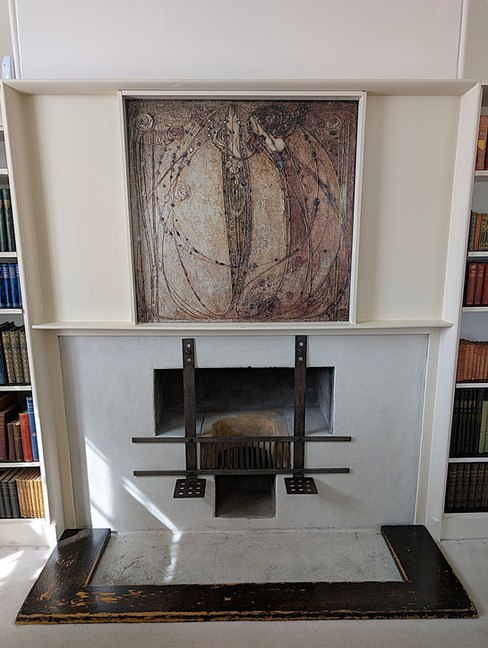
The Mackintosh House offers a rare glimpse into the private world of Charles Rennie Mackintosh and his wife, Margaret Macdonald. Originally located at 78 Southpark Avenue (formerly 6 Florentine Terrace), this was the couple’s home from 1906 to 1914, where they created interiors that were as innovative as Mackintosh’s public buildings. When the original house was demolished in the 1960s, the University of Glasgow salvaged its fixtures and furnishings. These were meticulously reassembled within the Hunterian Art Gallery, preserving the proportions, layout, and natural light of the original rooms. The result is a faithful recreation of the Mackintoshes’ domestic environment, showcasing their disciplined yet elegant style—white walls, geometric furniture, and delicate decorative details that feel timeless even today.

Visitors can explore the principal interiors, including the dining room, bedroom, and hall, all furnished with original pieces designed by Mackintosh. The experience is intimate and immersive, offering a sense of how the couple lived and worked together. The Hunterian also features an Introduction Gallery, which tells the story of the house and the Mackintosh collection, along with archival photographs and drawings. It’s a must-see for anyone interested in design history, as it bridges the gap between Mackintosh’s architectural vision and his personal life.




Tailor-Made Top Tip:
While at the Hunterian Art Gallery, take time to explore its remarkable design collection. You’ll find original works by Charles Rennie Mackintosh, including his poster for “The Scottish Musical Review”. Next to it is one of Margaret Macdonald Mackintosh’s gesso panels – White Rose and the Red Rose - which add a mystical, symbolic dimension to their shared artistic vision. Also on the same wall, an exhibit by Frank Lloyd Wright – Pier Cluster Window for the Martin House, Buffalo – is featured. Frank Lloyd Wright was an American architect whose organic approach to design parallels Mackintosh’s philosophy of harmony between structure and nature. Seeing these three together offers a fascinating comparison of early 20th-century design innovators and their global influence.


Read on to find out about a lost library, a city centre lighthouse, and a house in a box!
Glasgow School of Art Library
The Glasgow School of Art is widely regarded as Charles Rennie Mackintosh’s architectural masterpiece. Completed in 1909, the building marked a turning point in modern architecture, blending traditional Scottish baronial elements with Mackintosh’s innovative geometric forms. Its bold façade and rhythmic windows make it instantly recognizable, but the true magic lay inside—especially in the world-famous Library, which was a jewel of design. The library featured soaring timber shelves, delicate detailing, and a serene atmosphere that perfectly reflected Mackintosh’s philosophy of harmony and craftsmanship.
I was fortunate to visit the Glasgow School of Art before the library was tragically destroyed in the second fire in 2018. Sadly, photography of the interiors was not permitted at the time, so I have no personal images to share—but the memory of that space remains vivid. The library was a sanctuary of light and wood, a place where every detail felt intentional and poetic.


Tailor-Made Top Tips:
Check the Glasgow School of Art website for updates on tours and restoration progress.
Even if interior access is restricted, the exterior and surrounding Garnethill area are worth exploring for their architectural character, especially the Beresford building on Sauchiehall Street.

The Lighthouse
The Lighthouse is one of Glasgow’s most iconic Mackintosh landmarks and holds a special place in the city’s architectural story. Completed in 1895, it was originally designed as offices for The Herald newspaper and later transformed into Scotland’s Centre for Design and Architecture in 1999. This was Mackintosh’s first public commission, and its striking tower and elegant interiors reflect his early mastery of form and function. For years, visitors flocked here to enjoy exhibitions, design showcases, and panoramic views of Glasgow from the rooftop platform.
Unfortunately, The Lighthouse has been closed to the public since the pandemic, and I haven’t been able to visit because of this recent closure. Glasgow City Council confirmed that financial constraints have prevented reopening, but there is hope on the horizon: negotiations are underway with a private organization to take over operations and restore public access. Plans include transforming the building into a net-zero innovation hub while maintaining visitor access, though no official reopening date has been announced yet. For now, the building remains closed.
Tailor-Made Top Tips:
Check the Glasgow City Council or The Lighthouse website for updates on reopening plans.
When it reopens, don’t miss the spiral staircase to the viewing platform—it offers some of the best city views in Glasgow.
For some more contemporary art and design, check out the street art murals on Mitchell Lane. The art by Keiti Forbes is part of the Glasgow Mural Trail.


Kelvingrove Art Gallery
Kelvingrove is one of Glasgow’s cultural treasures—and a must-visit for anyone interested in Charles Rennie Mackintosh and the Glasgow Style. The museum houses the largest public collection of Mackintosh’s work in the world, displayed in a dedicated gallery that celebrates his contribution to architecture and design. Here you’ll find original furniture, decorative panels, and light fittings from the Ingram Street Tea Rooms (1900–1912), alongside examples of his graphic art and domestic objects. These pieces reveal Mackintosh’s mastery of both form and function, and how his designs shaped modern interiors.

The gallery also highlights the collaborative nature of the Glasgow Style, featuring works by Margaret Macdonald Mackintosh, whose gesso panels and symbolic motifs add a lyrical dimension to their shared vision. Her ethereal designs contrast beautifully with Mackintosh’s geometric precision, offering insight into their creative partnership.
Tailor-Made Top Tip:
Entry to Kelvingrove is free, and it’s open daily (10 am–5 pm, later opening on Fridays and Sundays). Combine your visit with a stroll through Kelvingrove Park for a perfect day out.
The Hill House
Although not in Glasgow, The Hill House in Helensburgh is an essential pilgrimage for Mackintosh enthusiasts—a perfect day trip from the city. Commissioned in 1902 by publisher Walter Blackie, this striking home is widely regarded as Mackintosh’s domestic masterpiece. Completed in 1904, it embodies his holistic approach to design: every detail, from the architecture to the furniture and textiles, was conceived by Mackintosh and his wife, Margaret Macdonald. The house blends Scottish baronial influences with Art Nouveau elegance, creating a space that feels both modern and timeless. Its interiors—light-filled rooms, geometric furniture, and ethereal decorative panels—reflect the couple’s shared vision of beauty and functionality.

I visited The Hill House before the protective steel “Box” was installed around the building in 2019. This cage, which will remain until 2028, was introduced to combat severe dampness caused by Mackintosh’s experimental use of Portland cement on the exterior—a material ill-suited to Scotland’s wet climate. While the box may alter the view, it’s a fascinating conservation solution that allows visitors to walk around and even above the house for unique perspectives. Today, the property is managed by the National Trust for Scotland, and despite ongoing restoration, it remains open for tours, offering a rare chance to experience Mackintosh’s vision in a domestic setting.


Tailor-Made Top Tips:
The Hill House is in Helensburgh, about 40 minutes by train or car from Glasgow—ideal for a day trip.
Check the National Trust for Scotland website for opening times and updates on conservation work.
Don’t miss the elevated walkways of the protective box—they provide incredible photo opportunities and insight into the preservation process.
Book tickets in advance, especially during summer weekends.

If you are enjoying this list, remember and subscribe to my mailing list to receive my latest blog posts.
CR Mackintosh Mural
One of the most striking tributes to Charles Rennie Mackintosh in Glasgow isn’t in a gallery—it’s on a wall. The CR Mackintosh mural, created by street artist Rogue One in collaboration with Art Pistol, towers above the Clutha Bar on Clyde Street. Unveiled in 2018 to mark the 150th anniversary of Mackintosh’s birth, this 60-foot by 40-foot artwork depicts a monochrome portrait of Mackintosh gazing through a vibrant stained-glass window featuring the iconic Glasgow Rose. The mural is part of the Glasgow Mural Trail and has become a must-see for art lovers and photographers alike. It’s a powerful reminder of Mackintosh’s enduring influence on the city’s identity, blending heritage with contemporary street art in a way that feels uniquely Glaswegian.

Tailor-Made Top Tip:
Combine your visit with a stroll along the river or explore other murals nearby for a full street art experience.
Charles Rennie Mackintosh Statue, Argyle Street
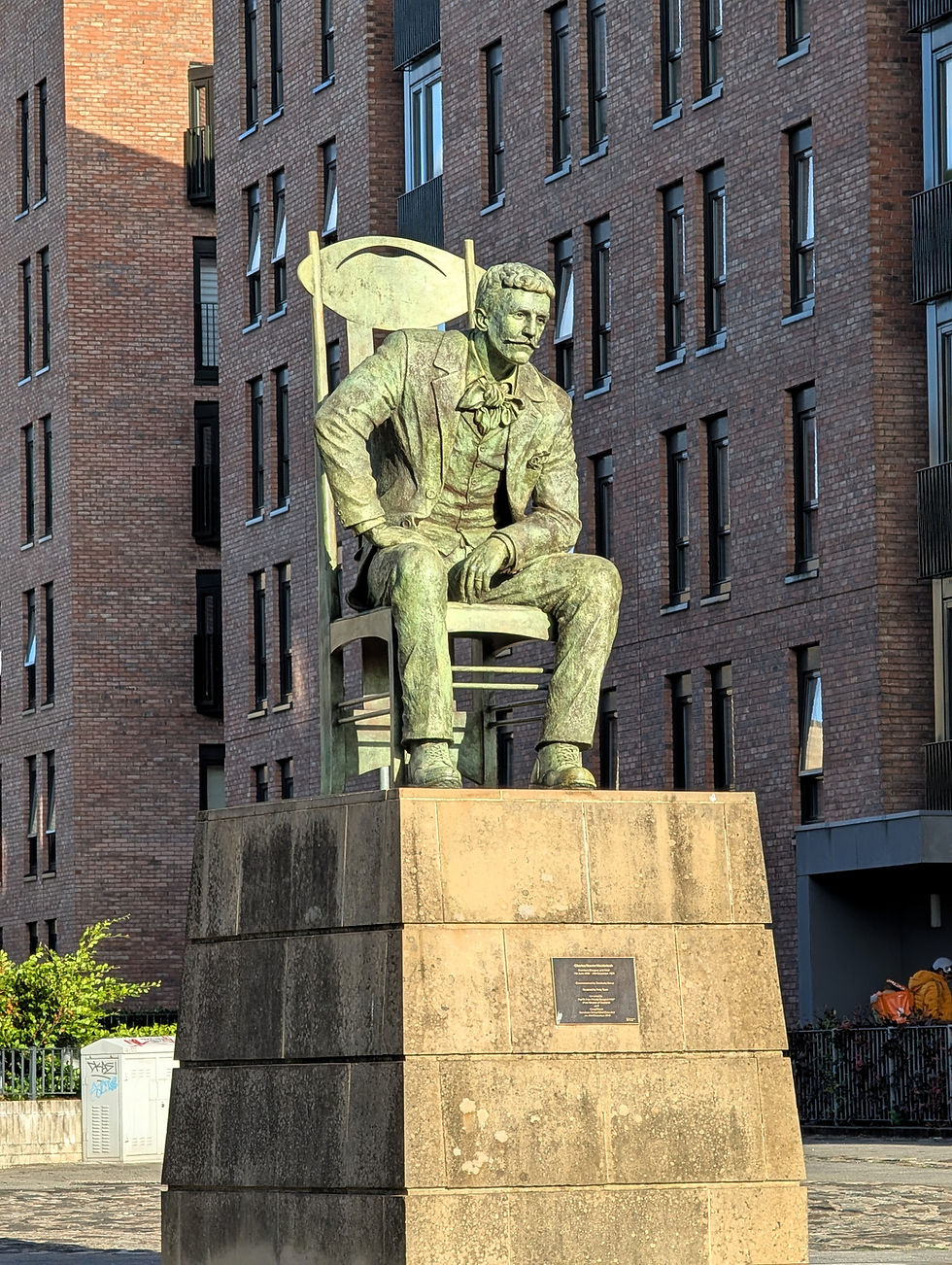
Unveiled in 2018 to mark the 90th anniversary of Mackintosh’s death, the Charles Rennie Mackintosh Statue is a striking tribute to Glasgow’s most celebrated architect and designer. Created by Andy Scott, the sculptor behind the famous Kelpies, the bronze statue depicts Mackintosh seated on one of his iconic high-backed chairs—a design originally featured in the Argyle Street Tea Rooms. Standing 2.8 metres tall on a plinth in the Finnieston district, the statue faces west along Argyle Street, symbolically surveying the city he helped shape. It’s believed to be the first public sculpture dedicated to Mackintosh.
National Museum of Scotland
Although not in Glasgow, I couldn’t resist including the Charles Rennie Mackintosh exhibits at the National Museum of Scotland in Edinburgh. The museum’s design galleries feature original furniture, decorative panels, and architectural drawings that showcase Mackintosh’s distinctive blend of geometric precision and organic motifs. You’ll also find works by Margaret Macdonald Mackintosh, whose ethereal gesso panels complement her husband’s structured style, and pieces that place their work in the wider context of the Art Nouveau movement.

Tailor-Made Top Tip:
Entry to the museum is free, and it’s open daily from 10 am to 5 pm.
The Mackintosh pieces are part of the Art and Design galleries, so allow time to explore related collections for a deeper understanding of the Glasgow Style.


Quick Questions Answered
Why are Charles Rennie Mackintosh roses so famous? The “Mackintosh rose” is a stylised, geometric interpretation of a rose that became a hallmark of the Glasgow Style, part of the broader Art Nouveau movement. It blends organic curves with geometric simplicity, creating a motif that feels modern yet natural. This design appeared in textiles, furniture, stained glass, and architectural details, making it one of the most recognizable symbols of early 20th-century decorative arts. Its appeal lies in its versatility: the rose can stand alone as an elegant emblem or integrate seamlessly into complex designs, balancing industrial materials with delicate pastel tones.
Is Mackintosh to most famous Scottish architect? Charles Rennie Mackintosh is widely regarded as Scotland’s most famous and influential architect, though he shares that spotlight with figures like Alexander “Greek” Thomson (you can see perhaps Thomson’s best work at Holmwood House, a National Trust for Scotland property, in the southside of Glasgow).
What was the Glasgow Style? The Glasgow Style was an early 20th-century design movement that fused Art Nouveau elegance with Scottish traditions, characterized by geometric forms, stylized floral motifs, and a balance of simplicity and ornamentation.


What was the Art Nouveau style? Art Nouveau was an international design movement from the late 19th and early 20th centuries that emphasized organic, flowing lines, natural forms like plants and flowers, and elegant ornamentation, aiming to break away from historical styles and create a modern aesthetic across architecture, furniture, and decorative arts.
What was the Art Deco style? Art Deco was a modern decorative style of the 1920s–1930s, defined by geometric shapes, symmetry, bold lines, and luxurious or industrial‑age materials such as chrome, glass, lacquer, and polished stone. It emerged in France and gained prominence after the 1925 Exposition Internationale des Arts Décoratifs in Paris, blending influences from Cubism, the Vienna Secession, and non‑Western art with a sleek, forward‑looking aesthetic. Celebrating glamour, modernity, and technological progress, Art Deco shaped everything from skyscrapers and cinemas to furniture, jewellery, and everyday objects, leaving a legacy of striking, streamlined design recognised worldwide.
What was the difference between Art Nouveau and Art Deco? Art Nouveau and Art Deco were two distinct design movements separated by time and philosophy: Art Nouveau (1890–1910) embraced flowing, organic lines and nature-inspired motifs to create handcrafted elegance, while Art Deco (1920s–1930s) celebrated modernity with bold geometric shapes, symmetry, and luxurious industrial materials, reflecting the glamour and speed of the machine age.


Conclusion
Charles Rennie Mackintosh left Glasgow with an extraordinary gift—a collection of buildings, interiors, and designs that continue to inspire over a century after they were created. Walking through this city and experiencing his work first-hand isn't just about ticking off tourist attractions; it's about understanding how one visionary Scottish architect challenged conventions and created something timelessly beautiful. From the intimate domesticity of the Mackintosh House to the social elegance of the Willow Tea Rooms, from the spiritual quiet of Queen's Cross Church to the bold statement of the Hill House, each location reveals another facet of Mackintosh's genius and his partnership with Margaret Macdonald. Whether you're spending a weekend or a full week in Glasgow, these sites offer independent travellers like you the chance to engage with design history on your own terms—at your own pace, following your own curiosity. I hope this guide helps you navigate Mackintosh's Glasgow with confidence and inspires you to look a little closer at the details that make his work so special. After all, that's where the magic lives—in the carved birds on a church beam, the geometric precision of a chair back, the way light filters through a stylized rose in stained glass. Glasgow is waiting to share its Mackintosh treasures with you, and trust me, it's an experience you won't forget.


Where to Stay in Glasgow
Glasgow offers excellent accommodation options across all budgets, with strategic locations that put you within easy reach of the city's best attractions. The compact city centre and efficient subway system mean you can base yourself almost anywhere and still explore with ease. For independent travellers, I'd recommend staying in the West End for cultural attractions and bohemian vibes, the City Centre for maximum convenience to shopping and nightlife, or the Merchant City for boutique character and excellent dining. Here are my tested recommendations across different price points.
Luxury Options
Kimpton Blythswood Square Hotel - Housed in a stunning Georgian building in the heart of the city, this five-star hotel combines period elegance with contemporary luxury. The spa is exceptional, and you're a five-minute walk from the Gallery of Modern Art and all the city centre action. The rooftop bar offers spectacular views across Glasgow's Victorian skyline.
Hotel du Vin One Devonshire Gardens - Located in Glasgow's affluent West End, this boutique hotel occupies a row of Victorian townhouses with individually designed rooms featuring freestanding baths and whisky-themed décor. You're perfectly positioned for Kelvingrove Art Gallery, the Botanic Gardens, and all the West End's excellent restaurants. The on-site bistro serves outstanding Scottish cuisine.
Dakota Deluxe Glasgow - This sleek contemporary hotel near the SECC combines modern design with genuine comfort. The steakhouse restaurant is among Glasgow's best, and you're ideally placed for the Riverside Museum, SSE Hydro concerts, and the revitalized Clydeside district. Stylish rooms feature luxurious bathrooms, and the service feels genuinely personal.
Mid-Range Options
CitizenM Glasgow - This design-focused hotel on Renfrew Street delivers style without the premium price tag. Super-comfortable beds, floor-to-ceiling windows, and a brilliant location between the city centre and trendy Sauchiehall Street make it perfect for independent explorers. The 24-hour canteen and living room create a social atmosphere that solo travellers particularly appreciate.
The Z Hotel Glasgow - Tucked into the heart of the shopping district on West Regent Street, this compact boutique hotel proves that clever design beats unnecessary space. Rooms feature luxury bedding and power showers that rival hotels twice the price, while complimentary wine and cheese every evening in the lounge creates a convivial atmosphere. You're literally two minutes from the subway and surrounded by Glasgow's best restaurants.
Motel One Glasgow - Located on the edge of the Merchant City, this German chain brings sleek contemporary design at surprisingly affordable prices. Rooms are compact but cleverly designed, and the One Bar is perfect for evening drinks. You're within walking distance of Glasgow Cathedral, the Necropolis, and the city's best coffee shops and restaurants.


Budget-Friendly Options
Moxy Glasgow Merchant City - This playful Marriott brand brings boutique style to budget prices in the trendy Merchant City quarter. The industrial-chic design, self-service check-in, and lively bar create an atmosphere more akin to staying with cool friends than a traditional hotel. You're surrounded by independent bars, vintage shops, and artisan coffee houses that define modern Glasgow.
Ibis Styles Glasgow Centre George Square - Right on George Square in the absolute heart of Glasgow, this cheerful hotel includes breakfast in the price and offers characterful rooms that feel more boutique than budget. The location means you can walk to virtually everything, and the nearby Queen Street Station connects you to Scotland's wider rail network. Staff are genuinely helpful with local recommendations.
Safestay Glasgow Charing Cross - For budget travellers seeking more than basic dorms, this design-conscious hostel, just a 20-minute walk from George Square offers stylish private rooms alongside shared accommodation.
Tailor-Made Top Tip:
Book accommodation well ahead if visiting during major events (Celtic Connections in January, West End Festival in June, or when there are concerts at the SSE Hydro). Glasgow's hotel prices remain reasonable compared to Edinburgh, but the best-located properties fill quickly. The West End offers the best neighbourhood feel with excellent restaurants, while the City Centre puts you closest to transport links for day trips across Scotland.
Related Blog Posts
If you would like more information on Art Nouveau and Art Deco and how to see the architecture and design first hand, please view the Tailor-Made Itineraries posts below:
Have you visited any Mackintosh sites in Glasgow, or are you planning a trip to explore his architecture and design? I'd love to hear about your experiences or answer any questions in the comments below!
Don’t forget that Tailor-Made Itineraries delights in creating bespoke self-guided tours. So, if visiting any of these masterpieces of Charles Rennie Mackintosh architecture and design appeals to you, reach out to me by email. I would be more than happy to design a self-guided tour around your requirements incorporating Mackintosh designs or indeed, a general tour of Art Nouveau and Art Deco gems.
Tailor-Made Itineraries posts every two weeks, and you can subscribe to the latest blog and newsletter here. Until then, happy reading and safe travels.
Barry
Contact Me: tailoritineraries@gmail.com
Tailor-Made Itineraries create one-of-a-kind bespoke self-guided travel itineraries for adventurous and curious travellers.
These self-guided tours deliver a personalised and exciting holiday experience that takes the effort out of trip planning.


Comments